
24 Hours of 9/11: Shaker Heights Native and Former Paramedic Shares His Story
Twenty-five years after the attacks, Adam Axler recounts details of his Sept. 11 experience in his new memoir American Triage.
by Annie Nickoloff | Sep. 7, 2026 | 5:00 AM

Photo courtesy Adam Axler
Adam Axler was less than one hour into a 16-hour shift as a New York City paramedic when the first plane hit the north tower of the World Trade Center on Sept. 11, 2001.
“It was chaos the rest of the day from there,” says Axler, a Shaker Heights native.
Working for Lenox Hill Hospital in the Upper East Side neighborhood, both Axler and his partner soon moved to ground zero in Lower Manhattan, where hijackers crashed airplanes into the Twin Towers that morning.
He recounts the day in his memoir, American Triage, published in May:
In place of Tower 1’s top floors, a dark hole, oddly and grotesquely shaped, carved out by a passenger jetliner. Nothing could be more real or terrifying. The New York skyline forever altered. Smoke gathers, before shooting out in bursts from the side of the tower’s new mouth. Insidious superheated jet fuel gets to work melting the girders, first in drips, then in vertically layered waves.
Axler was in the middle of helping New Yorkers, struggling to see through clouds of dust ballooned out by the south tower’s collapse. Then, the north tower fell.
“We spent the rest of the day trying to help people, and sort out how few people there were to help, after the initial collapses of the towers, which was all shocking in its own right,” he says.
The towers don’t collapse like a toddler knocking over an architecturally flawed Lego creation, Axler writes. They sink, like pulling the wrong Jenga piece from the bottom few rows. Like the devil smashing pancake stacks on top of each other. The smells of diesel and Manhattan summer heat, my own fresh sweat, dissipate as the North Tower projectile vomits down Vesey Street.
On that same morning, a third hijacked plane crashed into the Pentagon in Virginia. Shortly after, a hijacked plane crashed into a field in Pennsylvania after its crew and passengers fought back against its hijackers.
Nearly 3,000 people were killed, most of them in New York City. The coordinated events mark the deadliest terrorist attack in American history.
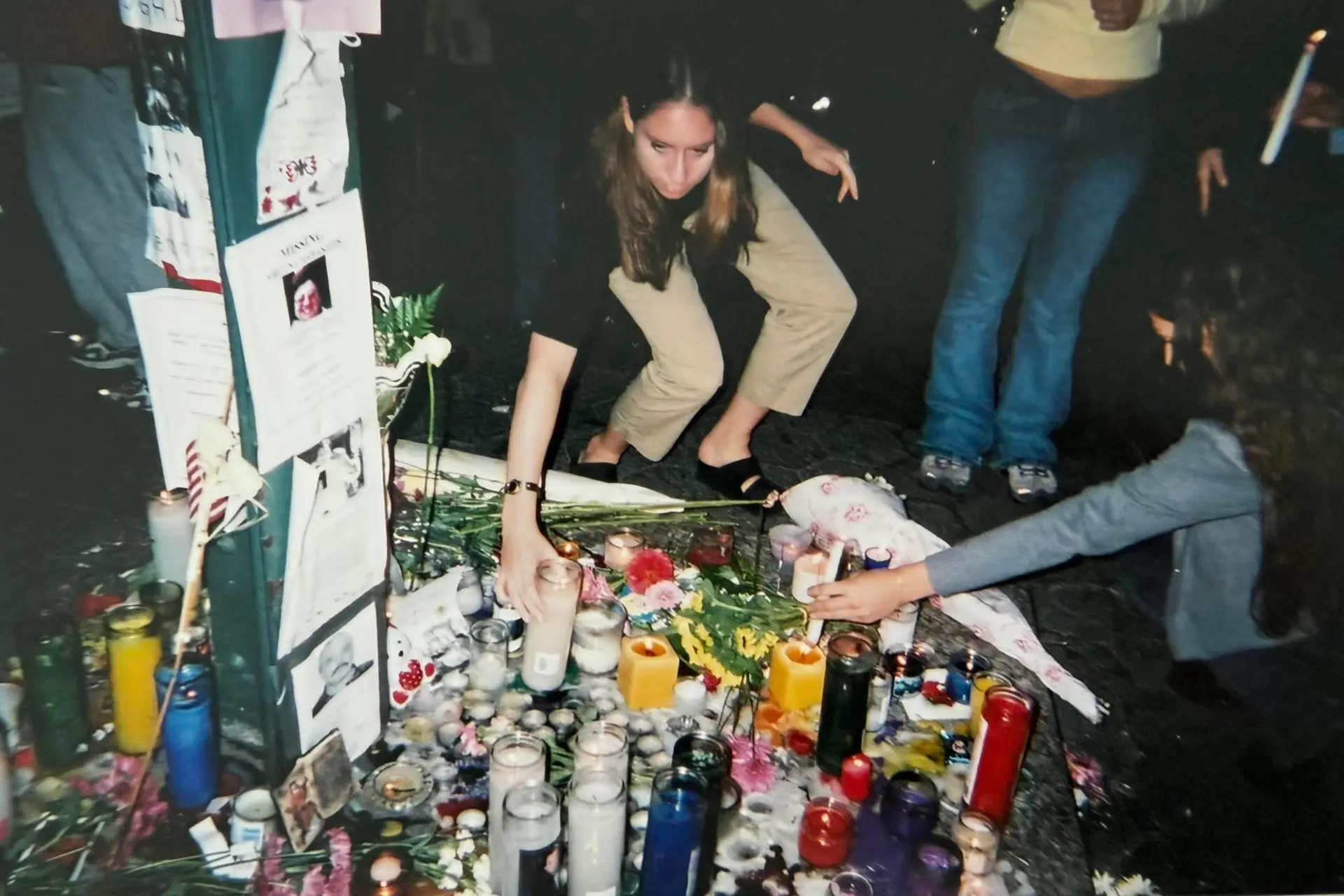
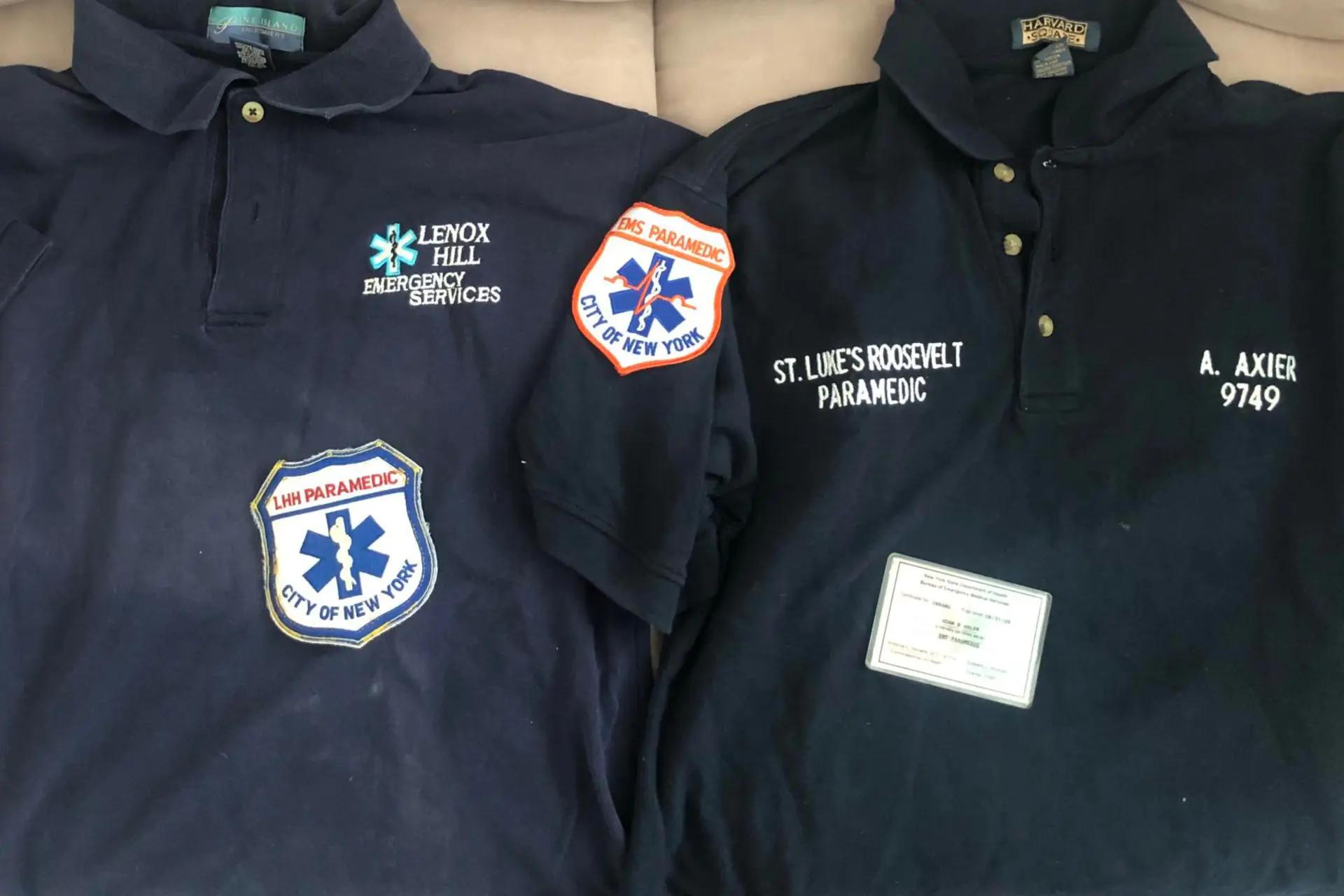
Along with his stark retelling of 9/11, American Triage documents Axler’s various stories gathered while working as a firefighter, paramedic and physician assistant in emergency and urgent care settings in Ohio, New York and Florida. These days, Axler has left behind his stethoscope and turned to a career in bookselling with his Collectible Science Fiction online store.
American Triage dedicates many of its 174 pages to 9/11. While working at ground zero, Axler and his partner flushed first responders’ eyes with water, controlled bleeding and wrapped broken bones. Later in the day, they were instructed to move to the nearby St. Vincent’s Hospital, where, for the author, the reality of the attacks sank in:
Empty beds. Empty ERs. And thinking about how lonely the unusually placed stretchers outside our Lenox Hill doors are as we come and go. I know now that a binary event has occurred. Anyone who could make it, made it. Anyone who couldn’t, is dead.
The author says that, today, he is relatively unscathed from the attacks. A member of the 9/11 Museum and a part of the World Trade Center Health Registry, Axler hasn’t experienced long-term respiratory issues or long-term post-traumatic stress disorder, 25 years after the event.
But he knows the impact and effects the attacks have had on many 9/11 first responders.
“If I can shed light on what it was like, and what other people went through that day, and the type of support that they should be showing, that makes me happy,” Axler says. “It’s a critical moment in our history, and it’s shocking in some sense that it’s already getting lost in time a little bit.”
He continues: “I think it’s very important to remind people of what happened that day, and more importantly, the effect it’s had on the survivors in the city, healthcare workers, and what’s been done about it, and how we tie that into how we treat our emergency service and healthcare workers since then. To remind people this did really happen in our country.”
For more updates about Cleveland, sign up for our Cleveland Magazine Daily newsletter, delivered to your inbox six times a week.
Cleveland Magazine is also available in print, featuring immersive stories, helpful guides and beautiful photography and design.

Annie Nickoloff
Annie Nickoloff is the senior editor of Cleveland Magazine. She has written for a variety of publications, including The Plain Dealer, Alternative Press Magazine, Belt Magazine, USA Today and Paste Magazine. She hosts a weekly indie radio show called Sunny Day on WRUW FM 91.1 Cleveland and enjoys frequenting Cleveland's music venues, hiking trails and pinball arcades.
Trending
-
1
-
2
-
3
-
4
-
5