
How Amending Cleveland’s Admission Tax Is Giving Independent Venues a Boost
Teetering on the edge of profitability, about a dozen local entertainment spaces are getting a little bit of extra relief.
by Chloe Banno | Jul. 17, 2026 | 5:00 AM

Photo courtesy The Zender Agenda, via Flickr
Thanks to an increase in demand for live experiences (and skyrocketing ticket prices), the world’s biggest concert and event company, Live Nation, saw a 16% increase in revenue year over year, according to its second quarter report. On the flip side of the industry, small music venues continue to struggle, with a recent study showing that 64% of independent venues and festivals nationwide failed to turn a profit last year.
For Cleveland venues, relief is coming in the form of a small amendment to an ordinance that has a significant impact on local entertainment venues' bottom lines.
Dating back to 1976, the ordinance defined the admissions tax for local entertainment venues. Originally, it placed a 6% admissions tax on all venues, which was eventually raised to 8% in 1995 to aid in funding the construction of the Cleveland Browns stadium. In 2012, that ordinance was amended to completely exempt venues with a capacity below 150 people from the tax, and to reduce the rate to 4% for venues between the 150 and 750 capacities.
SUGGESTED: Why We Need to Support Grassroots Music Venues
It remained this way until May, when Cleveland City Council member Kris Harsh brought an intriguing suggestion to the table: broaden the small venue tax exemption to include all venues with capacities below 750 people. The idea originally came from a friend, he says. After requesting some breakdowns from the city, he found that only about 12 venues fell into that 4% bracket. Those venues accounted for only $340,000 of the $25 million the city makes from admissions tax. This is silly, Harsh remembers thinking.
Council agreed, and the amendment passed by a vote of 13-1.
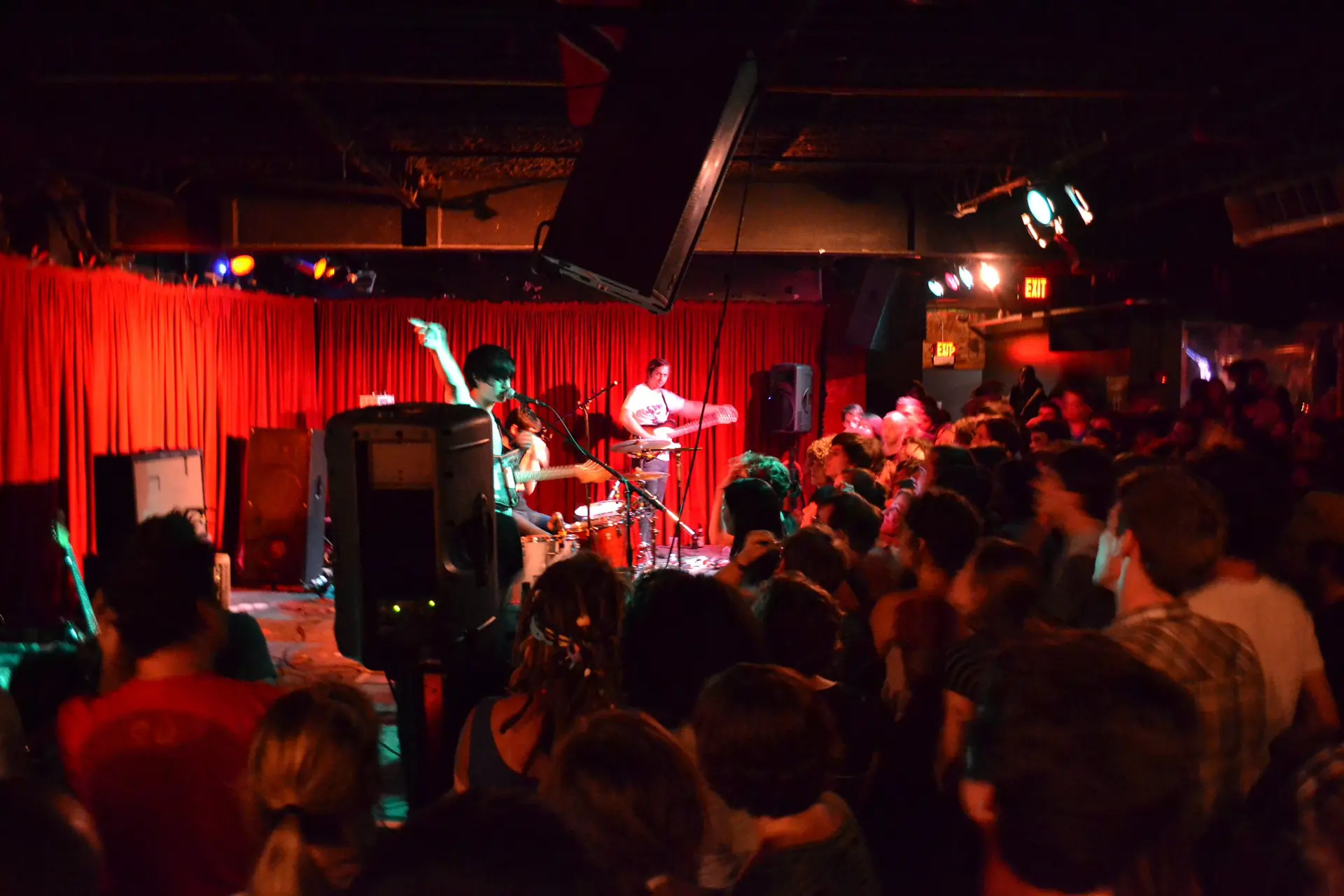
“My hope with this is that these venue operators recognize that we care,” says Harsh, who represents Ward 4, which largely covers the Old Brooklyn neighborhood, home to The Foundry Concert Club. “We’ve got a great music scene in Cleveland, and we want them to know that we’re doing what we can to keep the music alive.”
Harsh is serving his second four-year term on Cleveland City Council. Throughout his career, he has advocated for housing justice and community development efforts, and his time as a councilmember has been no exception. What many don’t know about Harsh is his background with the indie music scene. As a former on-air radio host of 91.1 WRUW and a member of a band, which he bashfully declined to name, Harsh cares a lot about the success of these local venues, the kind of places he performed at in his 20s.
“I moved to Cleveland with a guitar in my hand to be in a community of musicians,” he says. “These places are where smaller musicians get to grow up.”
SUGGESTED: WCSB College Radio's Shutdown Is a Profound Loss for Cleveland’s Creative Communities
The amendment is largely designed to help local businesses recover from pandemic-related losses. Even six years later, Sean Watterson, owner of Happy Dog in Cleveland, says COVID’s impact remains. His business, which has a capacity of a little more than 200, falls within the new exemption.
“In the best of times, music and comedy clubs operate in very thin margins,” says Watterson. “Pre-COVID, our average profit margin was between 3% to 5%. Since COVID, we have not had a profit. In the case of the Happy Dog, last year we paid around $4,000 (in admissions tax). Even though that doesn’t seem like a lot, with margins that tight, it makes a difference.”
Watterson, who has an extended background in law and advocacy for independent venues, played a major role in getting this ordinance approved. The National Independent Venue Association, for which Watterson serves as secretary, conducted a study called "The State of Live." Shared with Cleveland City Council, the data shows that Cleveland’s independent venues generate $1.17 billion annually in economic output for Cuyahoga County, yet only 25% of these stages were profitable in 2024.
“When someone tried to steal the AC unit from The Foundry [Concert Club], and they had to cover the $1,000 in damages, all I could think was, If somebody stole the AC from Rocket Arena, the government would pay for it,” Harsh explained. “I would rather these local entertainment establishments, which are neighborhood anchors, have the money they need.”
This amendment, in Harsh’s view, is an easy, low-cost way for the city to support an entertainment scene that is integral to Cleveland. While this change may seem small and unnoticeable to guests, the performers and business owners expect it to be a catalyst for growth.
“We are the places that bring people together,” says Watterson. “Especially in such a divided time, it’s so important that people can come here to find some common ground.”
For more updates about Cleveland, sign up for our Cleveland Magazine Daily newsletter, delivered to your inbox six times a week.
Cleveland Magazine is also available in print, featuring immersive stories, helpful guides and beautiful photography and design.
Trending
-
1
-
2
-
3
-
4
-
5