
A $2.1 Millon Heist, Major Security and Bigger Money: Take a Trip Inside Cleveland’s High-Stakes Card-Collecting Scene
Pokemon and sports card collecting are hotter than ever in Northeast Ohio, where surprising discoveries, sales and thefts define the market.
by Annie Nickoloff | May. 5, 2026 | 5:00 AM

Illustration by Joe Gough
When the box hit the counter of The Geek Peek, shop owner Mike Pierce knew something was off. The thud disrupted an otherwise quiet weekend day in 2024, as just a few customers milled around, perusing stacks of cards and memorabilia. It was a little weird for Jacob Paxton to drop by the collectibles store like this, and even weirder to show up with a box full of sports cards. Pierce and Paxton are half-brothers, but the store owner says they aren’t particularly close.
“He was always the one involved in drugs and doing dumb sh--,” Pierce says, “and I was always the one that just didn’t get in trouble.”
Paxton told Pierce he found the cards while cleaning out the attic of an empty house and wanted to know how much they were worth. The box sat on the front counter, near displays holding Pokémon and Magic: The Gathering character cards in shiny foil packs. Shelves of Gundam model kits and anime figurines peered from their perches on the walls of the store in Cleveland’s Old Brooklyn neighborhood. Not a single sports card in sight.
But opening his brother’s box, even Pierce recognized an early 1900s Honus Wagner card, similar to one featured in an episode of Pawn Stars. It was encased in a plastic container, like the dozens behind it, a red flag. Pierce punched the card’s details into a grading website.
“That card says it sold for $350,000 two months ago,” Pierce said. “There’s no way in hell you found it in an empty house.”
Pierce looked through the collection, finding rare, century-old cards once packaged as prizes in Cracker Jack boxes, cartons of cigarettes or alongside loaves of bread. Faces of baseball icons like Babe Ruth and Mickey Mantle assembled into one strange team. Many of the 54 cards had sold for tens or hundreds of thousands of dollars in prior transactions.
A fortune, on the countertop.
“This is not a cheap amount of stuff,” Pierce said, looking directly at his brother. “This is, like, someone-kills-you type of money.”
The cards weighed heavily in his hands. He paused, suspicious, and suggested Paxton leave the box at the shop. He said they could contact both Professional Sports Authenticator, a trading card grading company, and Cleveland police to see if the items were reported stolen. At that, Paxton grabbed the box and darted out of the store.
Weeks later, Paxton was arrested, suspected of stealing $2,123,447 worth of baseball cards while working as a night-shift desk clerk at a Best Western. Paxton was one of a few individuals who would have had access to the box of cards, which had been shipped to the hotel for an annual sports collectors convention taking place that weekend. The cards were nowhere to be found.
After learning about Paxton’s arrest, Pierce contacted investigators and shared information about his brother’s visit to the store, about the cards he had assessed. He suggested looking at the home of one of Paxton’s friends, Jason Bowling, not far from The Geek Peek, to find them. Pierce’s tip marked a turning point in the investigation, says Strongsville Police Department Detective Jason Glover; a search of Bowling’s home turned up most of the cards.
“(Pierce) really blew things open for us,” says Glover. “He had put so much time and effort into creating his own business, then it was put in jeopardy by those stolen cards coming in there.”
Two cards from the box remain missing: a 1909 Ramly Walter Johnson card and a 1941 Ted Williams card. Glover, who collects sports cards with his three sons and inherited vintage cards from his father, believes the Johnson card could turn up at some point, since only a few copies are still in existence. The Williams card, which is more common, is less likely to be recovered.
“I will be looking for them until I retire,” Glover says. “I’ve asked around, and I keep an eye out, but I’m pretty confident that (Paxton) sold them on the street for a few hundred bucks along the way. One day, hopefully, they pop up.”
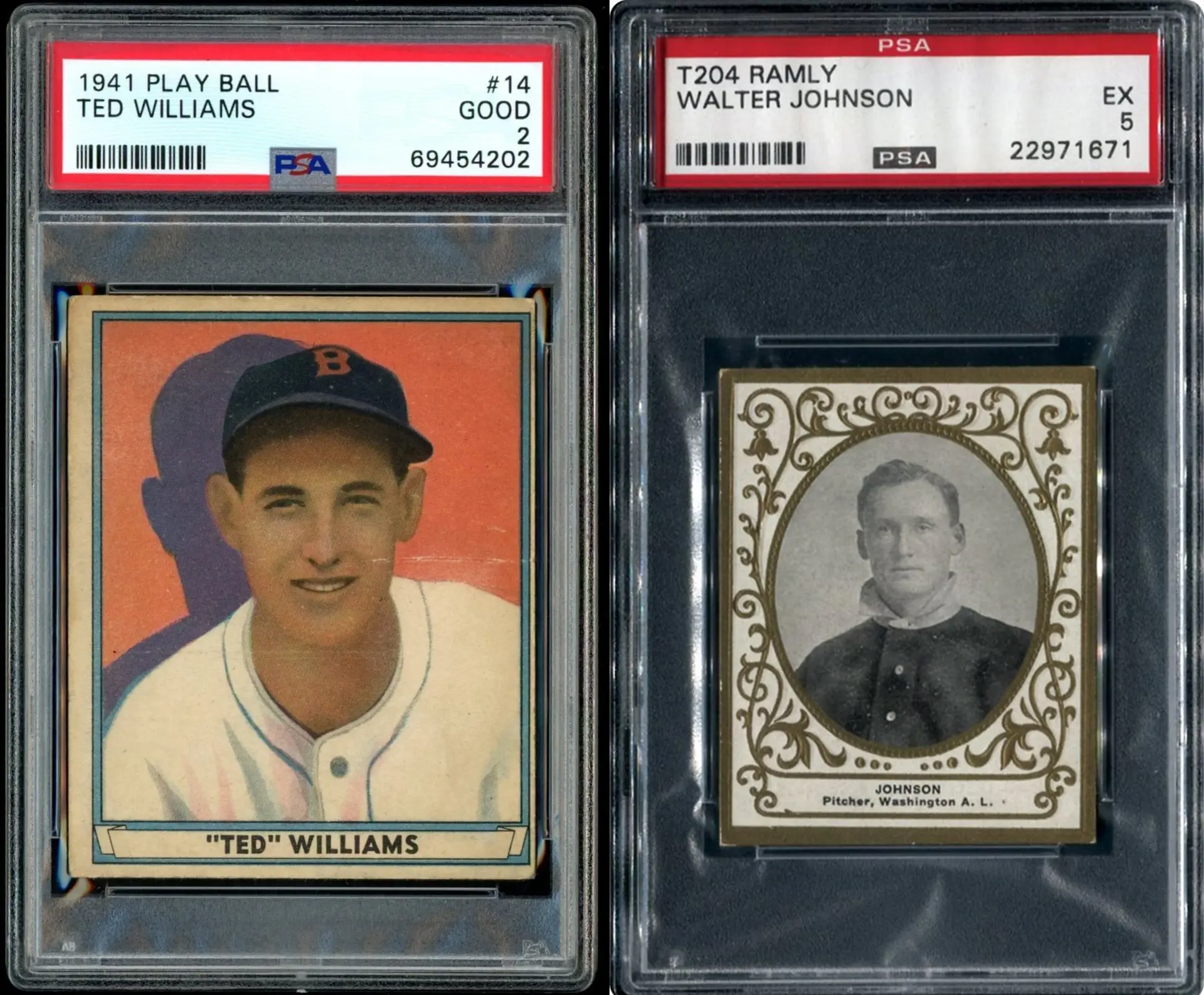
Card collecting interest has skyrocketed since the coronavirus pandemic. Enthusiasts in Ohio experience the highs and lows of the scene, both with sports cards and with trading card games like Pokémon, Yu-Gi-Oh and Magic: The Gathering. Verified Market Research, a data firm, valued the sports trading market at $12.62 billion and the trading card game market at $6.46 billion in 2024. Both are projected to grow.
There’s a lot of money in The Geek Peek’s business. A glass cabinet in the shop’s side room hosts a row of out-of-print Teenage Mutant Ninja Turtles trading cards priced at hundreds each, with a gray, serious-looking Splinter card asking $599 alone. A shelf containing Pokémon cards showcases a playfully illustrated Leafeon card going for $500 and a shiny Giratina-EX card for $1,225. These items come with grades of 9s or 10s — perfect, or near-perfect, conditions, as determined by card-grading companies.
RELATED: The Geek Peek Becomes Old Brooklyn’s New Nerdy Haven
These items, and the cash they bring, draw certain types of attention. The Geek Peek has dealt with stolen items and credit card fraud in its three years of operation, and experienced its first burglary attempt in February. But those moments paled in comparison to Paxton’s 2024 theft, which, due to the huge value of the cards, was a first-degree felony in Ohio.
“He did something wrong. He didn’t know how big of a wrong he was doing,” says Glover. “He saw cards. He didn’t know what they were worth. He was thinking, maybe a couple grand. He had no idea what he was holding on to.”
Paxton, who declined an interview request for this story, pleaded guilty to aggravated theft in Cuyahoga County Common Pleas Court in December 2024. He’s serving a four- to six-year prison sentence and owes nearly $90,000 in restitution, the total value of those two still-missing cards.
Drawing national attention, the case spurred legal action from Memory Lane, the vintage sports memorabilia dealer responsible for auctioning the stolen cards. The company is accusing Best Western of not properly protecting the FedEx-ed package of cards in the hotel’s mail room in an ongoing lawsuit.
Two years have passed since the theft. Pierce doesn’t spend much time thinking about it anymore. He’s plenty busy with Pokémon.
The fantastical Japanese brand has never been hotter. Its 30th anniversary created a “perfect storm” for collectors, Pierce says. In February, Westlake native Logan Paul sold an ultra-rare Pikachu Illustrator card for a Guinness World Record-breaking $16.492 million.
Not all cards in The Geek Peek are top dollar. Most items in the shop’s vast used Pokémon section cost less than a buck. And plenty of gems lurk in newly produced packs, creating a huge market for scalpers. Viral video clips capture a swathe of similar scenes across the country: determined sellers stampeding stores to cleanly sweep away the latest Pokémon releases the second they hit shelves.
People used to line up around the block of The Geek Peek on release days, too. In light of scalping issues, the shop now limits how many new packs of cards customers can buy. It also introduced a membership program.
“Our space is for the community and the players, and that’s why we have limits in place,” says Jill Bresnahan, Pierce’s partner and co-owner of The Geek Peek.
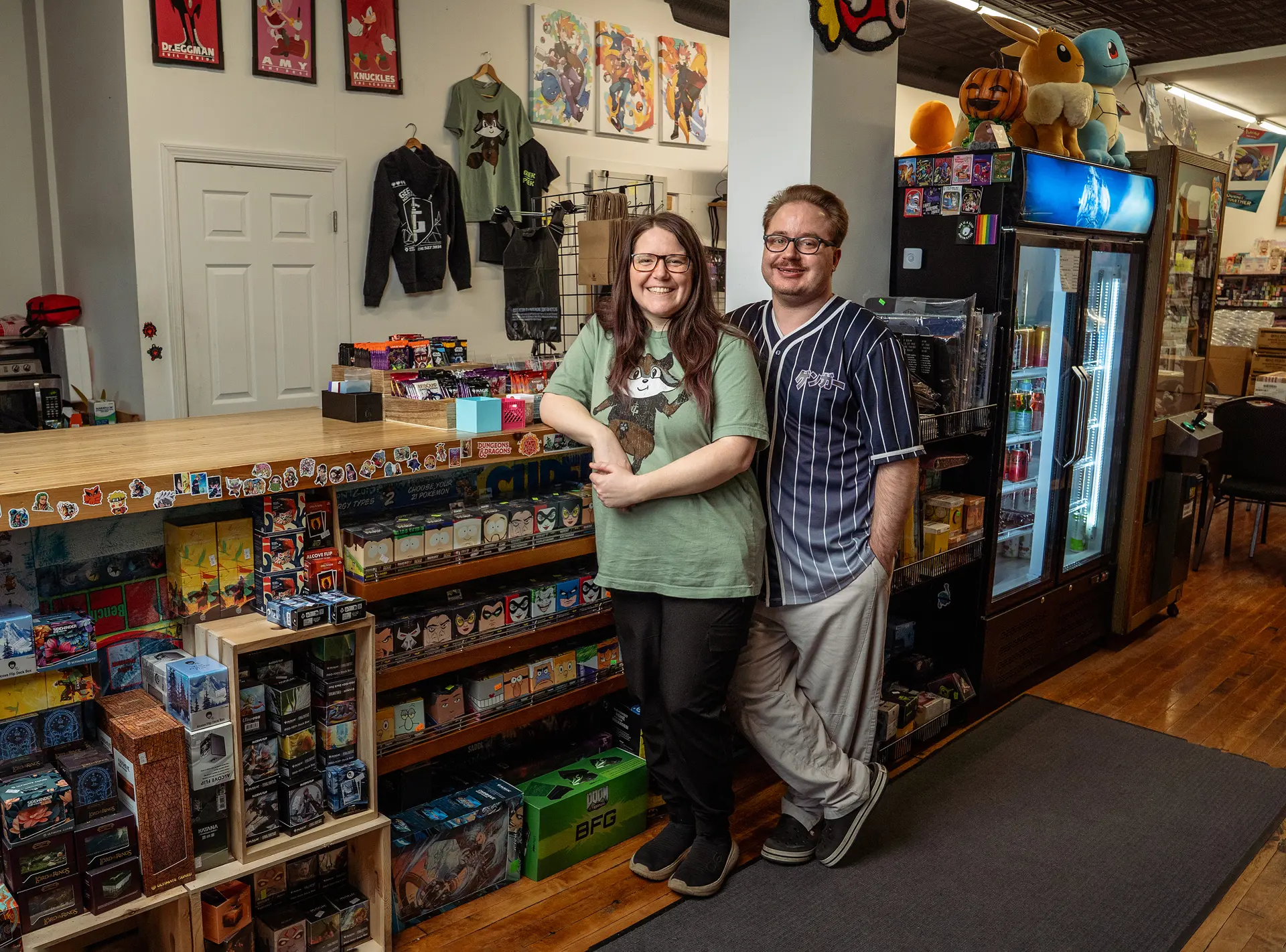
It’s not a perfect system. Bresnahan and Pierce recall when a heated exchange about shopping limits boiled over, and two customers attacked the storeowners. The exchange led Pierce to bolster the shop’s security. He added a panic button to the front counter, plus a Taser and pepper spray for employees to use for defense, if needed. Pierce got trained with a handgun and now carries a pistol.
Ever since, the couple has been a little quieter about new releases. The Geek Peek’s most valuable used cards remain on view — but under lock and key.
“You can only do so much, right?”
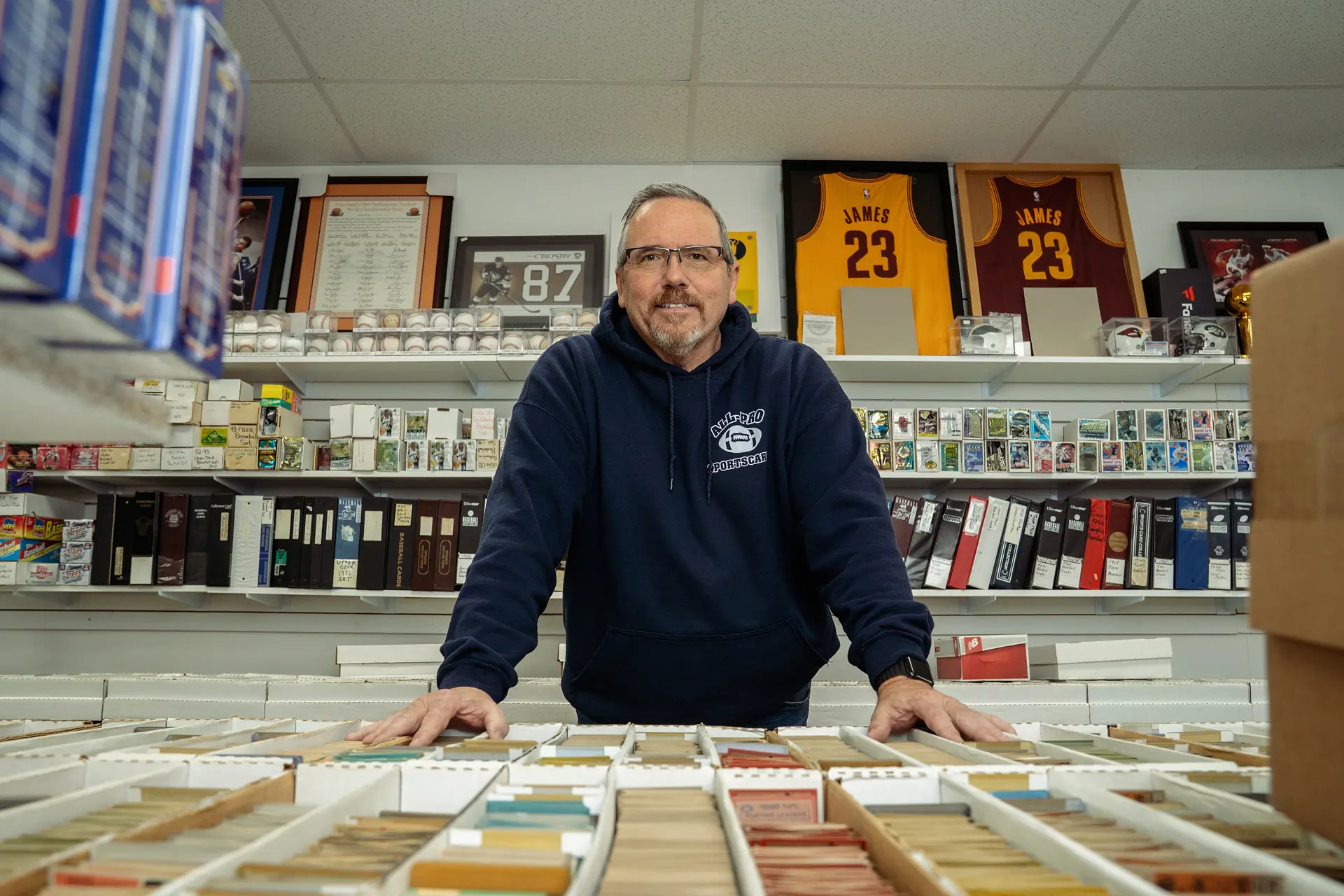
On a February afternoon, Rich Rinella’s eyes scan over All-Pro Sportscards. Three yellow bollards stand guard in front of the glass-windowed Cuyahoga Falls shop. A grid of metal bars protects the windows. Cameras and sensors electronically shield every corner of the store.
The last time someone tried to break into All-Pro a few years ago, they threw a fire extinguisher into the door, smashing the glass without breaking through. Rinella, who was relaxing at home at the time, heard a beep on his phone alerting him that the shop’s alarm had activated. It was one of three burglary attempts in just a few months of 2021, Rinella says, after experiencing just one attempted break-in in the previous 18 years.
Thousands of cards organized in glass cases, plastic binders and sealed boxes fill the small space located in an unassuming strip mall. Every now and then, like a golden ticket, something special arrives, nestled in deliveries of new product.
A redemption voucher for a one-of-a-kind card featuring Shohei Ohtani and Aaron Judge was in a newly released box sold at All-Pro last July. The card included the players’ autographs, along with embedded pieces of game-worn jerseys — one of which was worn by Ohtani in a 2025 game against the Cleveland Guardians.
Only a single card like this could, or would, ever exist. A regular customer discovered it in one of the four boxes he purchased from the store that day.
I hit a monster, he wrote in an email to Rinella.
“We thought, a million dollars,” Rinella later says from behind the counter of his shop, rows of sealed boxes neatly stacked on the shelves around him.
It went for double that. The card sold for $2.16 million after 52 bids in a Fanatics Collect premium auction this March.
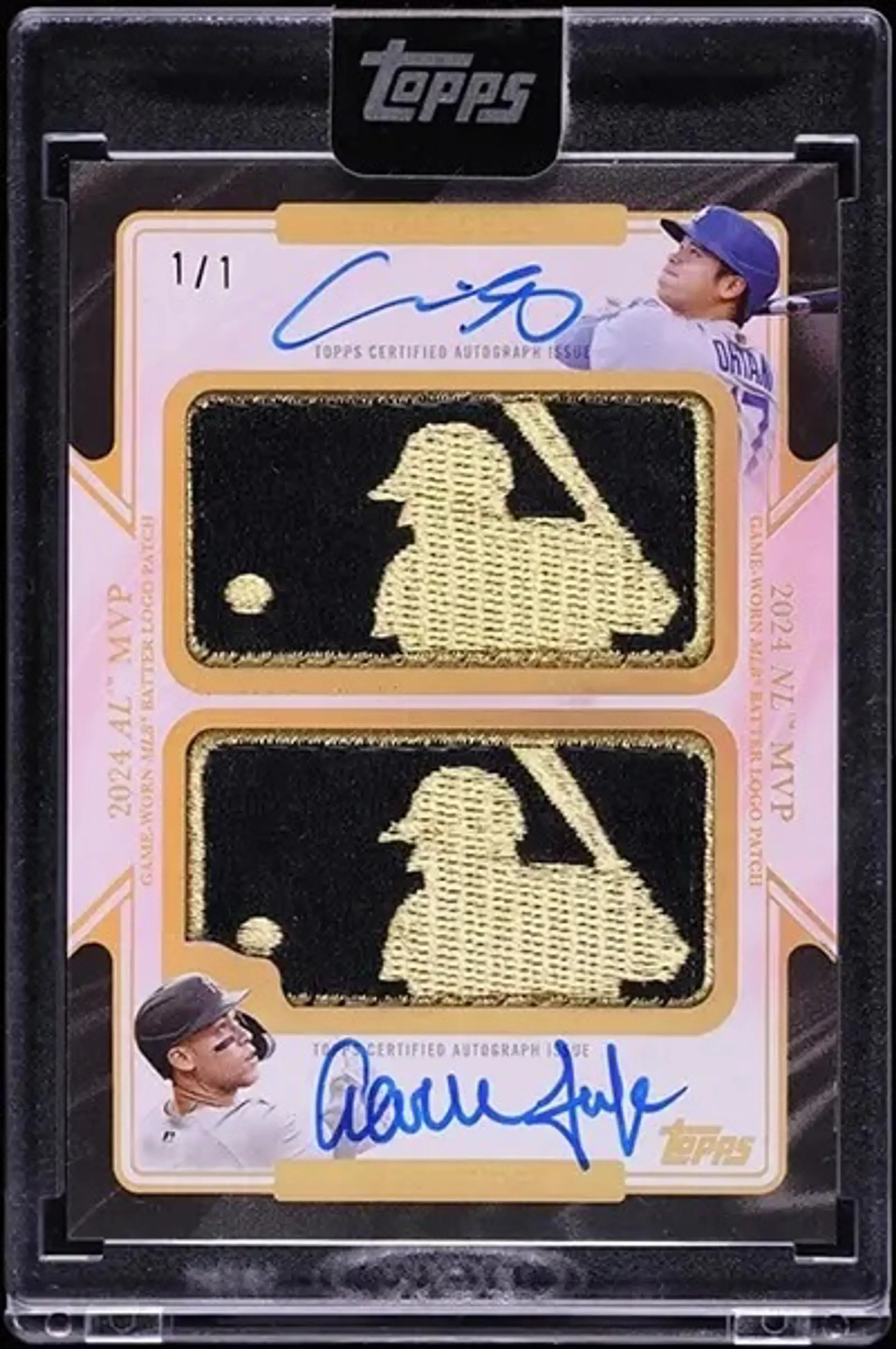
The Ohtani-Judge find gave Rinella’s 25-year-old shop momentary fame. A viral online post about the card drew attention from collectors and auction house representatives. A week after the find, at the 2025 National Sports Collectors Convention in Chicago, Rinella wore a T-shirt with custom text on the back: “The 1/1 Gold Logoman Ohtani Judge was hit at my store.” It marked a high point in a career that hasn’t always been rosy, Rinella says.
“Early on, the hobby was tough; it was hard. I mean, 10% margins at best, for a bunch of years,” Rinella says. “It really changed when COVID hit. Changed the whole industry.”
Rinella discovered a new community of collectors in the early days of the pandemic. Some had gone through old boxes of baseball cards at home. Others sought a hobby to enjoy while living with closures and restrictions.
The scene keeps growing. Rinella starts every day with a cup of coffee before heading to his laptop to research card-collecting trends. He calculates what boxes and sets might be most profitable and in-demand at his shop, then orders from his longtime factory accounts with manufacturers like Fanatics, Topps and Panini America. There’s plenty to consider: autographs, relics, editions and even rookies’ performances in certain sports.
Like Beanie Babies and other collectibles, there’s no guarantee that cards’ value will stay elevated forever. But activity in the hobby remains steady in 2026.
“It is gambling, with something tangible. Kind of like a stock market. That’s why I tell people, when they ask me what I do, is, ‘I’m a day trader,’” Rinella says. “‘I’m a day trader of cardboard.’”
Two cameras broadcast the hands and the faces of Brian and Cameron Redmon. One trains itself on the brothers’ expressions, perfectly lit by a ring light. The other camera zooms in on their gesturing hands, which rapidly tear open foil packs of cards. A snug office room holds a mountain of memorabilia behind them.
The Team Redmon Whatnot chat is active with casual messages about sports, music, internet memes and of course, Pokémon. User @bjimb0 sounds like they’re buying a lottery ticket when they talk about finishing a collection: I’m 1 masterball away. I’ll pay $$$ if you guys find it. Meanwhile, @bananayeti shares their nightly routine. Ima be putting kids to bed, they write. Tag me if I hit anything non ass.
For the uninitiated, it’s like combining an auction, a QVC program and a Twitch video game stream. Dozens of viewers pop in and out of the show, which the brothers host four nights a week for three to five hours at a time. While live, the Redmons call out special deals and giveaways, before selling and then ripping open packs of cards for all to see what’s inside. They ship out hundreds of packages of cards every week, and they say that last year they sold more than $1 million worth of product. The two run the business out of a private Cleveland office, avoiding a brick-and-mortar store because of perceived security risks.
“You see a new story on a card shop getting robbed almost weekly right now,” Brian says. “The amount of inventory that we deal with, it just makes you a target.”
RELATED: Three Of The Rarest Cards To Come Through Akron's Full Grip Games
More than 60,000 Whatnot users follow Team Redmon. Many started by following Brian’s vlogs made while working as an actor and model in Los Angeles. He moved back to Cleveland in 2020, the same year the Redmons reignited their Pokémon passion. During COVID, Cameron, inspired by Logan Paul’s vlogs, checked their parents’ attic out of curiosity. There, he found a box filled with vintage cards, including 10 valuable Charizards. Not long after, Brian picked up a few new packs to rip open.
“The thing that I remembered was the smell,” Brian says. “When I opened it up, I was like, Oh my God. It hit the farthest back part of my brain, like, I remember this.”
It started as a side gig, but now the Redmons work as full-time Pokémon card auctioneers. They regularly drop $20,000 or $30,000 on individual sealed Pokémon base or booster boxes from the late 1990s, then resell their contents on Whatnot. They hope to someday hire more streamers and expand their show to run 24 hours a day, seven days a week.
“You get a ton of people who just come onto our stream and buy,” Cameron says. “It’s funny to think that these cards that were meant for kids and that we loved as kids are now, all of a sudden, so valuable.”
But it’s not necessarily so strange to think of Pikachu or Squirtle as components of an investment portfolio, says Michael Goldberg, a professor at Case Western Reserve University’s Weatherhead School of Management.
“Some people are doing real estate, or gold, or things like that. The thought that maybe you add in collectibles into your mix, it’s reasonable,” he says. “There’s some scarcity that’s built into the marketing of these things. Anything scarce is good.”
The Redmon brothers hunt for scarcity while streaming to their fans, who message like friends in the show’s chat.
“Rip or ship?” Cameron asks a viewer, @kronk07, who ordered an Ascended Heroes box of Pokémon cards during a Tuesday night livestream. Rip, Kronk messages back. And so the brothers tear open packs, scanning through dozens of cards. Users send emojis of four-leaf clovers and crossed fingers to invoke good luck.
Most cards are worth virtually nothing; common energy and creature cards. And then, scarcity! A holographic Mega Gengar. The brothers pause, mouths agape. The 70 online viewers instantly chatter with excitement, congratulating Kronk for the big hit.

In our analog elementary school days, my friend Bryan and I bonded over Pokémon, Animorphs and Beanie Babies — all the ’90s nostalgia we grew up around. While my disorganized, well-worn Pokémon cards were largely lost to time, Bryan’s were neatly arranged by type, preserved in plastic pages and filed in a bookshelf in his parents’ home for years.
We’ve both grown up. Bryan is a urology resident at the Cleveland Clinic with little time to do things like get his old Pokémon cards evaluated. So he lets me do it. When I arrive to pick up the binder from his apartment, he takes a break from practicing surgical knots on fake rubber skin, and shows me the collection. Flipping through the pages which contain roughly 600 cards, he wonders aloud if this prized relic of a childhood hobby could have something valuable inside. Maybe it’ll be worth a few hundred dollars. Maybe more.
On a busy Sunday at The Geek Peek, every table hosts groups of people playing cards. Some crews embark on mythical adventures in Dungeons & Dragons campaigns, while others fan out Magic: The Gathering cards on rolled-out mats. A few try out Riftbound, a relatively new card game from the League of Legends video game universe.
This scene is, after all, what most trading cards are designed for: games.
I slide Bryan’s hefty binder across Pierce’s desk. The store owner says he already examined two dozen other card collections earlier today. I wait in the other room, surrounded by dozens of visitors sipping sodas, rolling dice and haggling over pieces of cardboard at the cashier stand.
Before long, I’m called back to the desk. Pierce hands the binder over, with yellow sticky notes labeling the most noteworthy cards inside. If Bryan sells the collection today, Pierce estimates it could go for $7,500 to $8,500. If he waits a couple of years, it’ll be worth more than $10,000.
But if he sells the cards individually, he might get much more. Pierce’s notes signify some of the big winners in these sheets. A set of holographic Venusaur, Charizard and Blastoise base cards could sell for a combined $750-$1,000. A Shining Steelix, for $200-$300. Glittery EX cards, showing no damage, could draw $1,000 for Dragonite, and $300-$400 for Rayquaza. The highlight of the binder is a set of Charmander, Charmeleon and Charizard secret-rare cards, labeled with collection numbers that go higher than the set size. The trio is worth a combined $1,400 to $1,800, Pierce estimates.
Pierce speaks quietly when sharing these mind-boggling numbers. He doesn’t want too many other customers to overhear. You never know, he says, if some bad actor might wait outside the shop when we leave, and try to nab the binder. He tells me to not leave the book of cards out in a car or in public; to get it insured, and soon.
I thank him and head out of the store, striding past the main counter where four people are lined up to inquire about Pokémon card trades. I walk back to my car a little more quickly than I did on the way in, hugging the binder to my chest.
Bryan is, of course, excited. He’s thinking about selling. (Yes, my childhood has a price tag on it, he texts me later.)
Later in the day, Pierce shares a few photos of the collection, labeled “NOT FOR SALE,” on social media.
This binder came in today which was an absolute gem of a time capsule, spanning several of the greatest eras in Pokémon, Pierce writes. One of the greatest parts of running the shop is getting to see peoples’ individual collections, interests and hidden gems from past eras.
The comments roll in, admiring Bryan’s book. Insane collection, one commenter writes. What was their reaction to finding out what a gold mine they had?!?
Send em my way, another person says.
One more comment feels apt for this childhood hobby, these valuable memories, preserved.
Just for the love of the game.

Annie Nickoloff
Annie Nickoloff is the senior editor of Cleveland Magazine. She has written for a variety of publications, including The Plain Dealer, Alternative Press Magazine, Belt Magazine, USA Today and Paste Magazine. She hosts a weekly indie radio show called Sunny Day on WRUW FM 91.1 Cleveland and enjoys frequenting Cleveland's music venues, hiking trails and pinball arcades.
Trending
-
1
-
2
-
3
-
4
-
5