Northeast Ohio Adventurer Katie Spotz Plans To Row the Pacific Ocean Alone: Q&A
The endurance athlete plans to start her 10,000-mile journey in December.
by Annie Nickoloff | Feb. 10, 2026 | 5:00 AM

Courtesy Katie Spotz
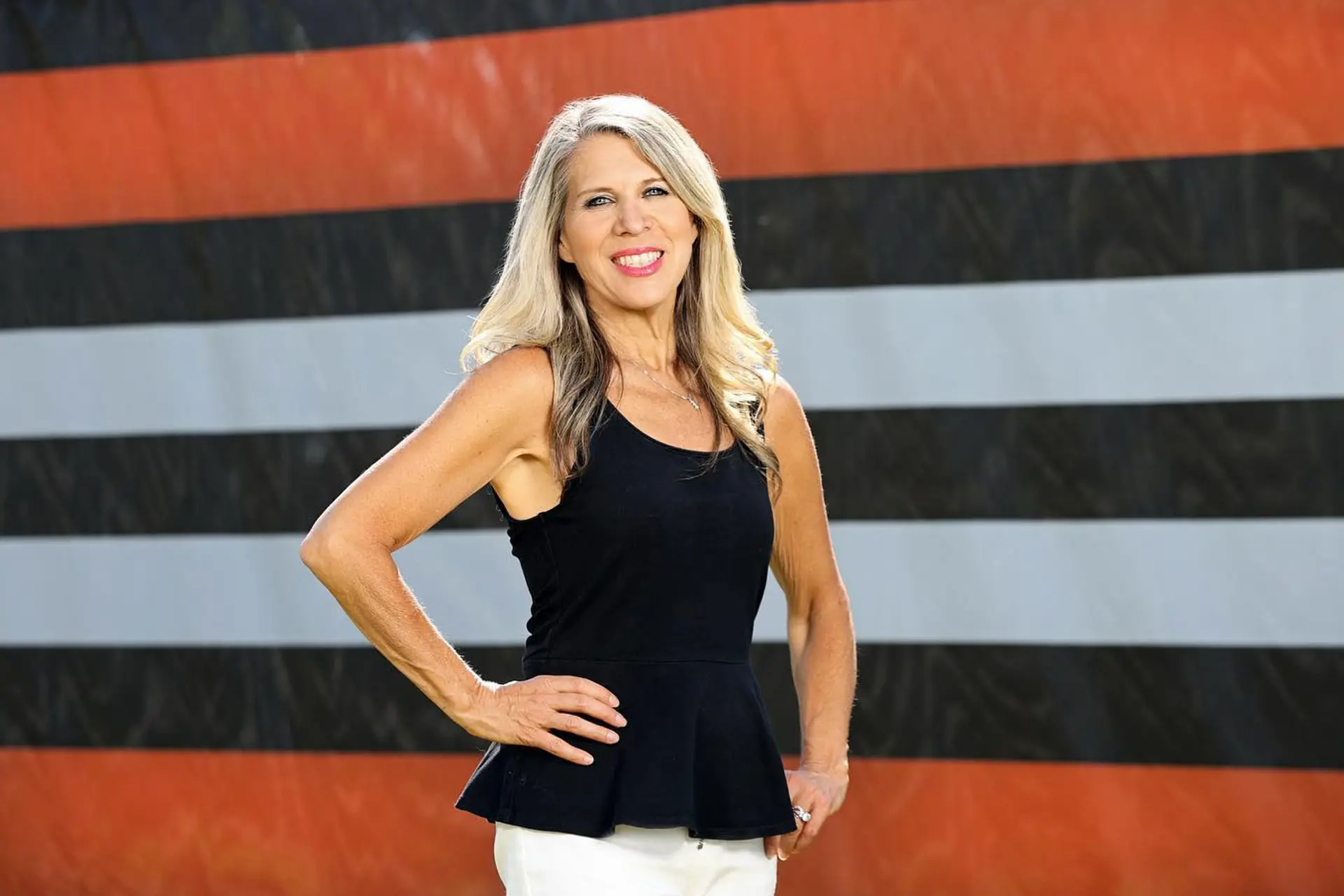
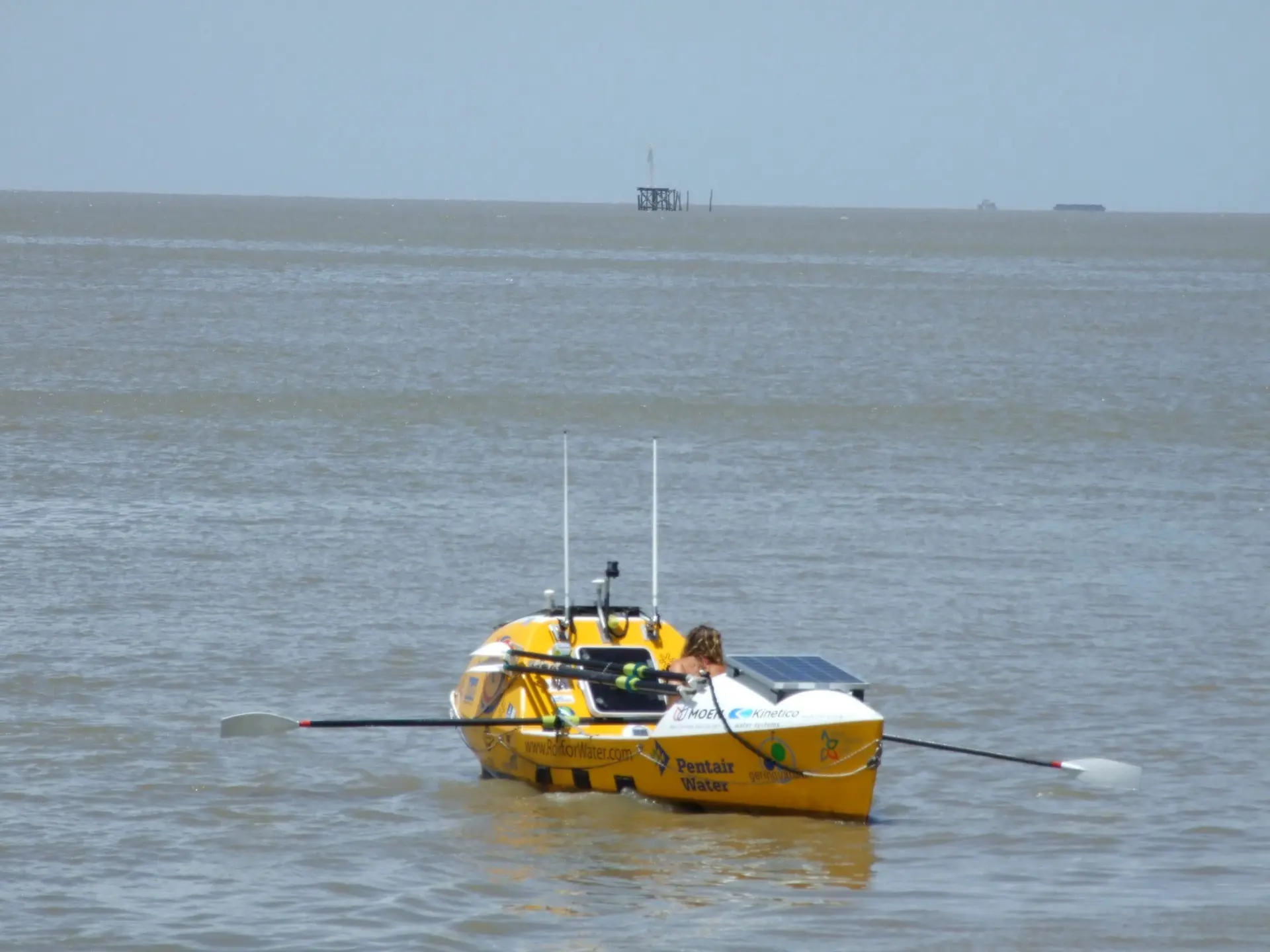
Katie Spotz has run across the states of Maine, Vermont and New Hampshire. She’s bicycled across the entire United States. She has biked across the continent of South America, swum the 325-mile length of the Allegheny River, and broken the Guinness World Record for the most ultra-marathons in a row (11, completed in Ohio in 2021). In 2010, she rowed solo across the Atlantic Ocean, covering 3,038 miles in her journey.
Next on her list? A solo row, unassisted and without stops, across 10,000 miles of the Pacific Ocean. The Mentor native plans to depart Lima, Peru, in December and end in Papua New Guinea months later, and to become the first U.S. woman to row solo across the Pacific Ocean.
Through her journey, Spotz aims to fundraise $100,000 for clean water efforts in Fiji.
Spotz is currently training for the adventure at The Foundry in Cleveland’s Flats and at Tremont Athletic Club. We caught up with the athlete to hear more about her upcoming adventure.
(This interview has been edited for length and clarity.)
Cleveland Magazine: What inspired you to want to attempt to row the Pacific Ocean?
Katie Spotz: I have wanted to do this for a long time. I was in the Coast Guard, and it was really a timing thing. This August, I did one of my last big bucket list challenges, which was a 200-mile run, which I was able to finish and did well. I felt stronger at the end than I did at the start. I've found that sometimes your body just accepts and adapts, and actually can get stronger, even though you're putting it through that kind of load. That was kind of the point at which I was like, “Okay, I'm ready.” Having said that, you're never really ready for an ocean because there's a lot that could go wrong, and that's part of the adventure. But, I’m as ready as I'll ever be.
CM: What are your preparations and training like this year, for the row?
KS: In April, I'll be in Fiji, visiting the water projects. May, I will spend several weeks with the boat builder, and I'll be training out on the boat, getting familiar with all the systems and all the gear, and then shipping it directly to Peru. I would argue that this is the best boat in the world. To date, it has been setting many world records, and it recently set a record on the Pacific for the fastest team to cross.
My training is generally two hours a day. It's a mix of rowing and strength and mobility. Then on the weekends, I like to do longer rows. Where I am right now, I could physically row the Pacific tomorrow. There’s not really any fitness I need to gain, but what would be helpful is preventing injury and feeling stronger. A lot of my training isn't necessarily about gaining strength, but preventing injury, and working on some of the underlying weaknesses that could make things uncomfortable. Lower back is an issue, shoulders can be an issue. Even your hands, working on mobility, and your wrists. It's getting into those nitty-gritty areas, rather than rowing 20 hours a week. So much of this is mental, and I'll be doing a lot of rowing, so I don't really need to be burning myself out before the journey. I want to feel fresh and excited, and so I'm rowing enough, but maybe less than you might think.
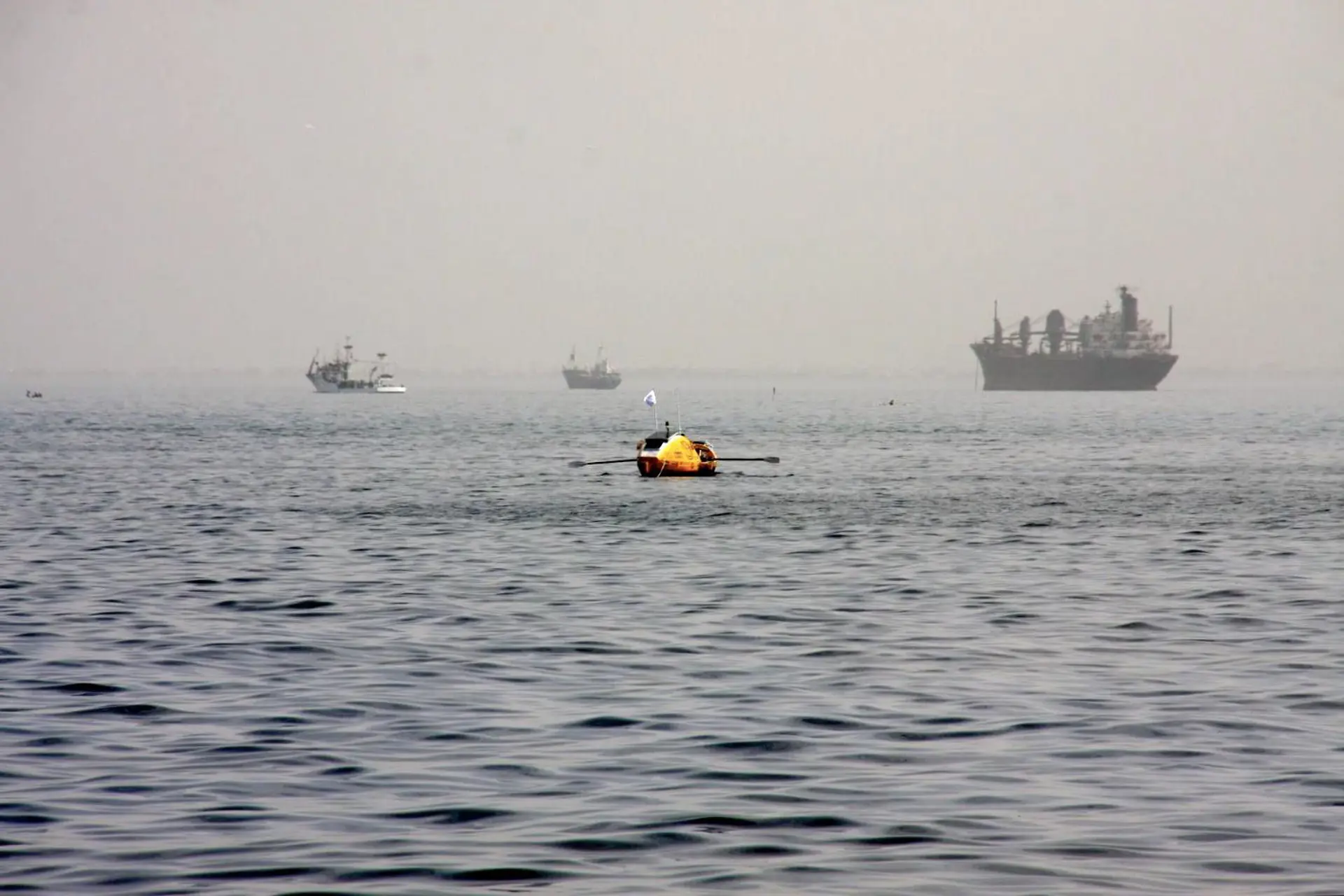
CM: You’ve rowed an ocean before. What lessons do you carry from the Atlantic journey in 2010?
KS: I feel so grateful for being able to do something most people would never even be able to do, and so I know how much pure gratitude that I have to have to just experience that. Yes, it was hard. I had 25-foot waves; all the things you would expect. Sharks would come every week. I had close calls with oncoming freighters. I had a couple fires, I had equipment failures, I had rashes, so there was that, but it was so wonderful to feel small and insignificant. We have a big, beautiful world. There's just so much awe. It's very energizing, it's very meditative, it's very calm. I feel like I'm almost even more creative; boredom is a good thing for us, and I will feel bored. No one died from boredom. I do think there are elements of letting your mind go places it normally wouldn't or couldn't. I think the ocean really affords you something that you can't really get in your day-to-day life, that silence.
They do say that two or three months alone is very different to five, six, seven, eight months alone; it's just a lot of alone time. All of these things are true. This is uncharted territory. I'm using all the tools that I've used in other endurance challenges, but it's definitely a huge unknown how, mentally, that will take a toll. I am a Christian, so I do have that sense of God being with me and carrying me when I feel like things are too heavy.
CM: Is there anything you do to keep yourself entertained or distracted while you’re out on the ocean?
KS: I definitely do have music. The waves are quite loud; if it's very quiet, it's not a good day, because that means you're not getting help from the winds and the current. When things are loud, it usually means the wind might be assisting you, so it is harder to hear audiobooks with how loud it can be. You don't have to think in rowing, but you do have to focus on the conditions and the stroke. If you don't time your oar stroke just right, you could break your ribs; you could bruise your knees. So I will be quite focused. I think the best place you can possibly be is very similar to the runner's high, where you completely surrender to the moment, as if there is no other moment, and you find peace in that moment, not yearning for anything. You're present. I do get into a flow state. It gets easier to get to that place the longer I do this. But it's a lot of listening to your body, too. If I ignore a signal, I might chafe, and if I just ignore that, it's not going to go away — it's going to get worse. You really have to constantly assess your body. I think ultra running taught me a lot about that.
At the end of the day, the goal is to feel good while doing this, and I have trained the last 15 years to say I do feel good running a marathon. I do feel good doing these things. I believe that there's a lot of joy, there's a lot of endorphins, there's a lot of gratitude for being in the front row seat to nature's biggest oceans and tallest mountains. This, to me, is what's worth living for — seeing the world and then actively participating in doing something to make it a little bit better. That's worth getting out of bed for.
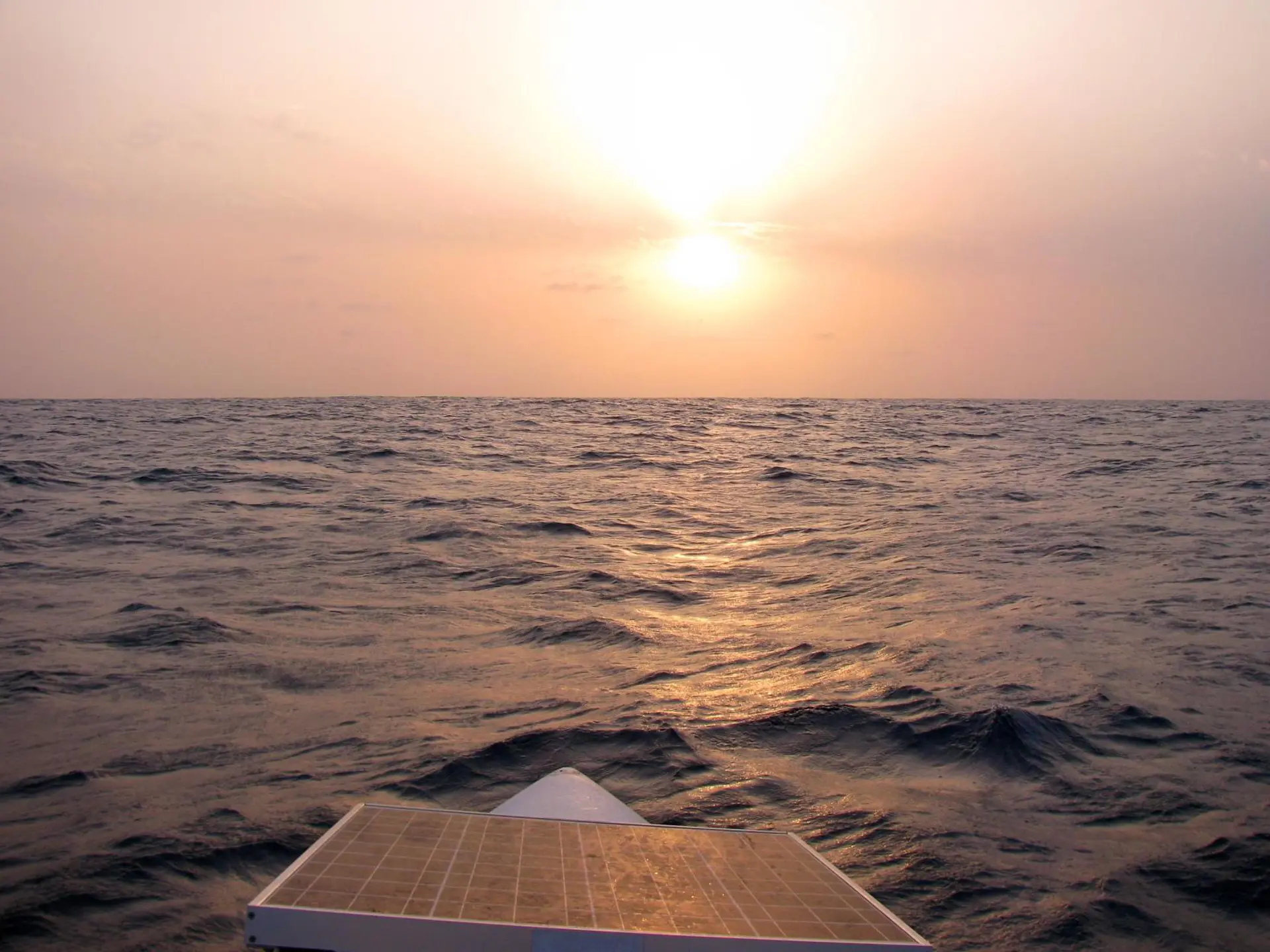
CM: What’s your boat like? What about different logistics like food and drinking water?
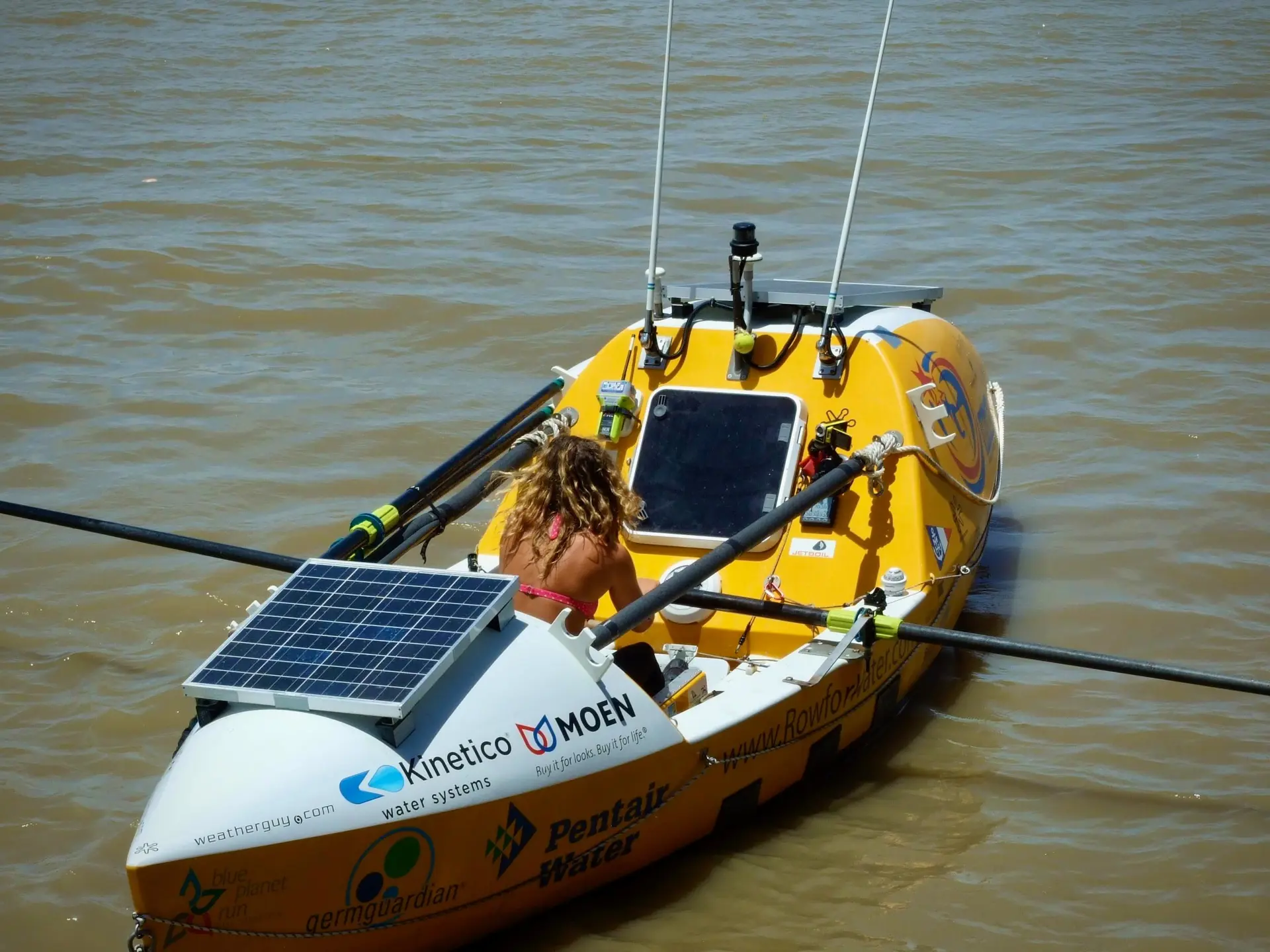
KS: The boat is 23 feet. There are two cabins, one is for sleeping and the other for storage. Then there's hatches that line the deck. It actually is designed for one or two people, so it absolutely has enough space. Fifty percent of my calories are coming from freeze-dried meals, and then the rest are chocolate bars, energy bars. I have some coconut powder and electrolyte mixes. I just finished my meal plan this week, which feels like a huge weight because it's a million calories. You have to think of everything and scrutinize every little detail — like, does it have enough calories? How does it pack? Will it spoil? Will a wrapper open? What's the expiration?
I don’t carry eight months of water. I will have a desalinator. I'll have Starlink, so I'll be able to post on Instagram, and there will be a tracker so you could see where I am. I do have a radio to communicate with other boats. I have a satellite phone. I have an EPIRB, which is the emergency beacon. I have a life raft. And a lot of food, and I'll have a backup fishing kit too. There's no bathroom, so you use a bucket, and then you use a solar shower for bathing and baby wipes — that's another big thing for ocean rowing is using baby wipes multiple times a day, because the salt will destroy your skin. You will have salt sores if you just let it sit there.
I am getting a seat that's basically, like, molded to my body. My friend’s coming from the Netherlands, and I jokingly was like, “You want to come to the butt molding appointment with me?” And she's like, “Sure, yeah, I'd love to.” Those are the types of conversations that are happening in my life right now. That is probably the most specialized piece of equipment. Yes, I'm using my quads and my hamstrings and my back and my arms, but the part of my body that probably will hurt the most is my glutes, from sitting all day.
I have been working with a nutritionist, which is different from my Atlantic crossing. You need to find joy. Food is a very big source of morale boost. It's probably one of the biggest morale boosts I’ll have out there. I definitely am prioritizing eating well and eating things that make me feel good.
CM: What’s your favorite snack while rowing?
KS: The only thing I ran out of on the Atlantic crossing was Snickers bars. I do have dark chocolates, and a little bit better chocolates this time. There are certain things that you get sick of eating if you're eating it all the time, but I've never gotten sick of chocolate or coconut water.
CM: How did growing up in Northeast Ohio factor into your accomplishments?
KS: I started this whole journey by being a bench warmer. I was physically there for team sports, but mentally I was not. I'd be the kid picking dandelions in the outfield; just more free-spirited and not competitive. I never expected this path. I had to take a gym class to get my high school diploma, and I tried to find the easiest class, which was “Walk, Jog, Run.” Just out of sheer boredom, I tried to run one mile, and that was what changed everything, because it made me realize I was my biggest limitation. It was this sense of, “If I thought I couldn't do this and I was wrong, what are the other things I'm wrong about?”
I do think being raised on Lake Erie, so many summers we would be riding our bikes down to Lake Erie and spending all day in the water and near the water. I do feel like that's where my love of water was born.
CM: This adventure will raise money for clean water access in Fiji. Where did you first learn about the issue, and why is it a cause you’re passionate about?
KS: I was in Australia doing an exchange program in college, and they had a drought. It was affecting when you could water your grass and if you could wash your car. There was this perpetual fear of the running water running out, and this was in a very developed country. Then one of my professors very casually mentioned that the wars of the future will be on water, and in some countries, it's already the case. My brain exploded — like, how is it possible that we are so advanced in our world, and yet a billion people don't have something that they need that is so basic? To me, it was like saying there's not enough air for everyone.
I also think if you care about anything, you could find a reason to care about water. If you care about youth, most of the people who are collecting clean water are kids or moms. If you care about education, kids can't go to school because of lack of clean water. We can't agree on everything, but no one ever has told me, “No, I don't think people should have clean water.” My adventures may be wild, but the fact that there are people on our planet who don't have clean water, I think that's even more crazy, right?
For more updates about Cleveland, sign up for our Cleveland Magazine Daily newsletter, delivered to your inbox six times a week.
Cleveland Magazine is also available in print, publishing 12 times a year with immersive features, helpful guides and beautiful photography and design.

Annie Nickoloff
Annie Nickoloff is the senior editor of Cleveland Magazine. She has written for a variety of publications, including The Plain Dealer, Alternative Press Magazine, Belt Magazine, USA Today and Paste Magazine. She hosts a weekly indie radio show called Sunny Day on WRUW FM 91.1 Cleveland and enjoys frequenting Cleveland's music venues, hiking trails and pinball arcades.
Trending
-
1
-
2
-
3
-
4
-
5