
The Power of Collaboration: How Greater Cleveland Nonprofits Create Community Impact
Across Greater Cleveland, nonprofits are partnering with foundations, businesses, volunteers and neighbors to address community needs, close critical gaps and create lasting change. Together, they’re turning collaboration into meaningful impact across the region.
by Kristen Hampshire | Nov. 2, 2026 | 9:00 AM

Courtesy The Providence House
When Greater Cleveland needs support, the nonprofit community shows up.
Longstanding organizations have grown and changed alongside the communities they serve, while newer nonprofits have emerged to address fresh challenges. Together, they are woven into the fabric of a region they serve in neighborhoods, hospitals, schools, homes and workplaces.
One opens a door. Another provides the next step. Foundations bring partners to the table. Businesses contribute resources and people. Volunteers give their time.
“We all need each other. We all rely on each other,” says Natalie Leek, president and CEO of Providence House.
She has a story that proves the point.
When Sister Hope Greener, CSJ founded Providence House in 1981, she was living with other Congregation of St. Joseph sisters in an Ohio City neighborhood where they worked and served. One helped start transitional housing that became Front Steps. Another founded Seeds of Literacy. Sister A second sister founded Seeds of Literacy. And another sister was closely connected to the priest who founded West Side Catholic Center.
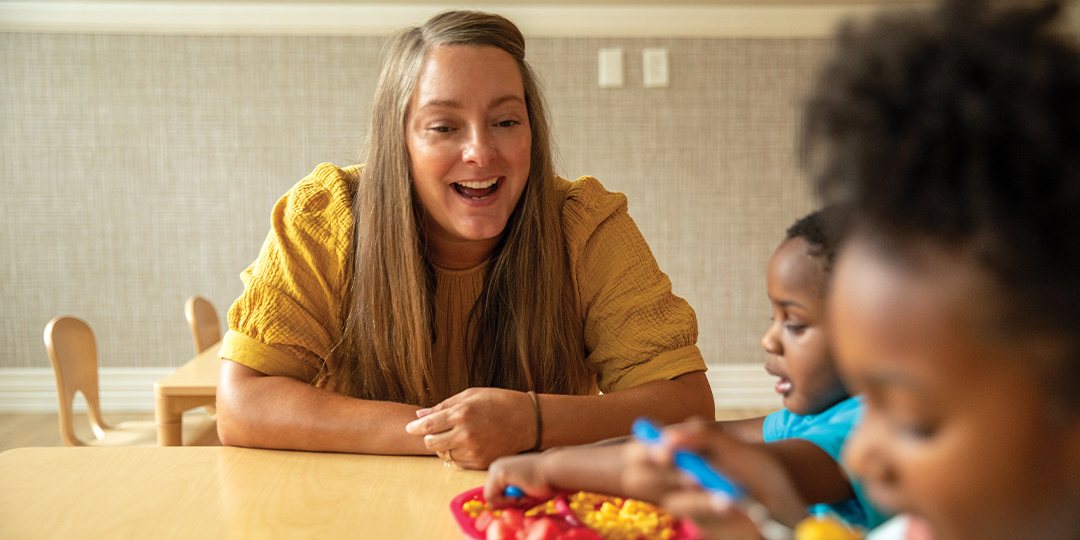
“They were roommates in the community when they started these programs that are still lifelines,” Leek says.
More than four decades later, all of those organizations are still serving Cleveland. And each one is a referral partner with Providence House. And every one is a referral partner with Providence House today. That kind of connection is central to how Greater Cleveland’s nonprofit community works. Missions may differ but needs overlap. “At the heart of it, we are all partners in making sure this community is safe and healthy,” Leek says.
The Cleveland Foundation sees its role in part as connecting those pieces.
“As a trusted partner and convener, we bring together donors, nonprofits, foundations, corporations and communities to tackle the region’s most important and urgent challenges together,” says Lillian Kuri, president and CEO.
She adds, “Meeting the immediate needs of the community will always be central to our mission…transformational change takes time. Philanthropy has the power to do both.”
‘We need to be here for these kids’
At Providence House, knowing where its role begins — and where another organization’s expertise should take over — is fundamental to the model. The crisis nursery provides voluntary, short-term residential care for children from birth through age 12 while parents address challenges that could destabilize a family.
“Our core competency is keeping kids safe and families together,” Leek says.
That means strengthening parenting and family bonds and helping children get on track developmentally, medically and educationally. “We deeply respect how brave and committed our families are because of how much they love their children. Parenting poor is not poor parenting.”
Leek adds, “We’re focused on getting families’ wellbeing in a place to move forward and rely on our community partners to be those long-term supports. When they leave here, they have a safety net.”
The numbers illustrate just how interconnected that safety net is.
Providence House made or received more than 715 referrals involving 121 community organizations, from hospital systems and behavioral health providers to treatment programs, schools and employment services.
Providence House now operates two campuses, one each on Cleveland’s West and East sides, serving approximately 500 to 600 children annually.
It is the country’s largest residential crisis nursery.
“Right here in Cleveland, we are doing our good work for kids and families, and we provide technical assistance and guidance to crisis nurseries operating across the U.S. and Canada,” Leek says.
Just as Providence House is there for families in crisis, the community shows up for Providence House, too.
On July 4, gunfire struck twice at its new East Side nursery at East 118th Street and Buckeye Road. Staff moved children away from street-facing areas, kept them calm and continued caring for them. “They said, ‘We need to be here for these kids,’” Leek relates.
Donors stepped forward to support security improvements. Neighbors organized Friends of Buckeye to advocate for and support an organization that had only recently arrived in their neighborhood.
It was a reminder that the relationship between a nonprofit and its community runs both ways.
“They said, ‘We need to help Providence House and spread the word about who they are so the neighborhood knows this is a place we need to protect and support,” Leek says. “That’s resilience. That’s residents stepping forward to say, ‘If you’re safer, we’re all safer.’”
‘We are giving them hope’
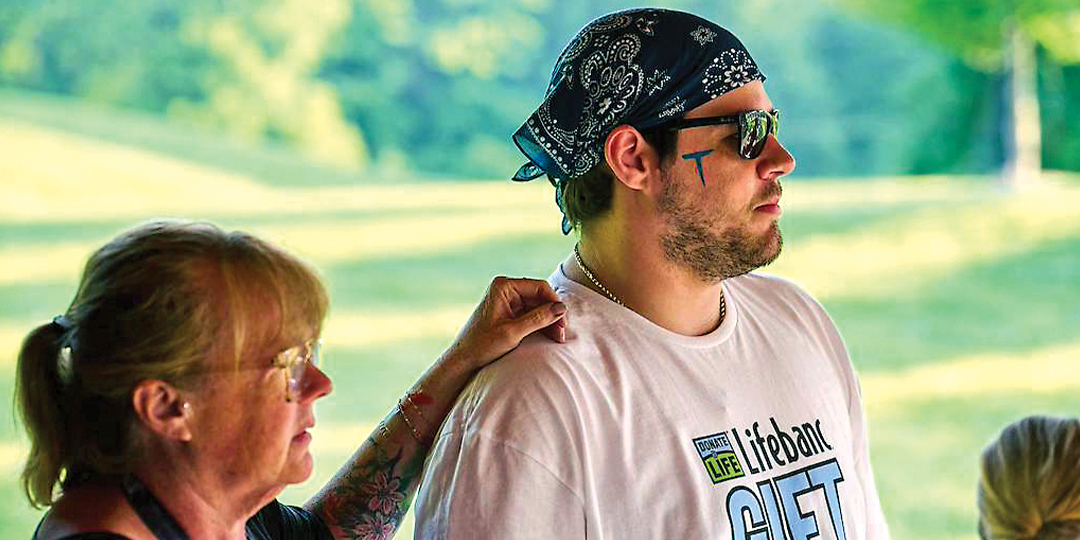
The hallway is silent. Hospital staff, family, friends and community line the walls as a donor is wheeled toward the operating room. Lifebanc calls it an Honor Walk, a final tribute to the person whose organs may soon save other lives.
“The silence is full because it’s palpable,” says Katie Payne, CEO.
And Lifebanc’s walk with a donor family does not end there.
Its bereavement programs include support groups, individual assistance and experiences designed specifically around grief. During a recent “A Day in My Grief Filled Shoes” seminar, participants painted pairs of shoes to illustrate their own grief journeys. Other programs bring together mothers who have lost children, spouses, siblings, as well as families affected by overdose or suicide and more to make sure donor families receive the continued, compassionate care they deserve.
That deeply personal work is one side of an organization whose mission also depends on extraordinary coordination.
Payne describes donation and transplantation as a three-legged stool: Lifebanc, donor hospitals and transplant centers.
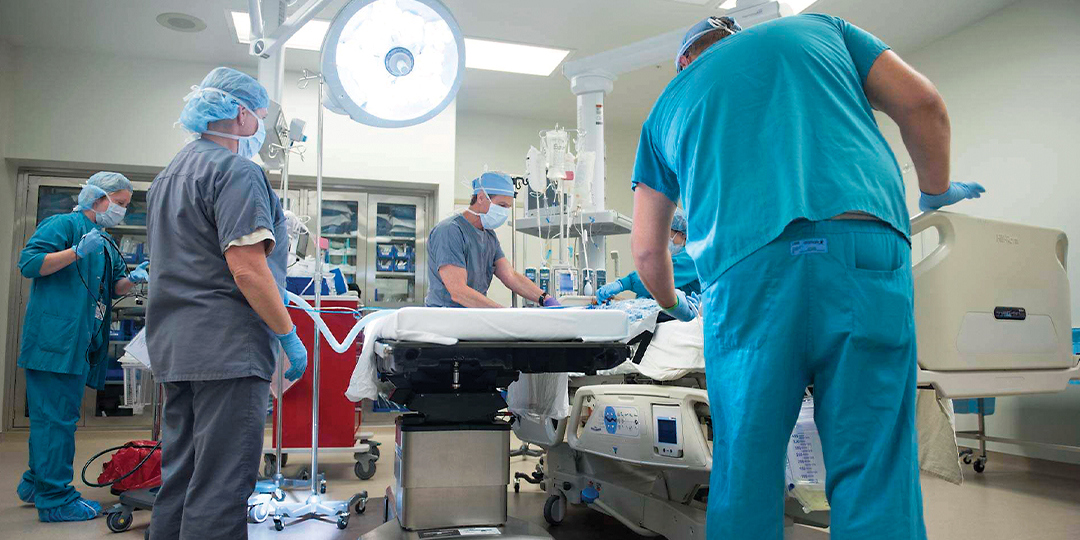
The organization works with approximately 80 donor hospitals and a web of physicians, bedside caregivers, transplant teams and others to coordinate donor care, operating-room time, staffing, organ placement and transportation.
All of those teams have to arrive at the right place at the right time. An operating room has to be available. Staff must be ready. Transportation needs to move an organ safely to its recipient, sometimes across the country.
“A challenge we address regularly is donor hospitals that are strapped for resources in a lot of rural locations, and we are trying to help them facilitate the gift of donation,” she says. “It’s our job to meet them where they are and facilitate that gift while making sure the hospital feels supported.”
But there is another partner in that network that can’t be scheduled into an operating room: the community itself.
“We only exist and are successful if we are trusted by the community,” Payne says.
That trust is particularly important in a field where misconceptions about organ donation persist. For Lifebanc, building relationships and understanding is as essential to the mission.
Payne and family care coordinators explain the ripple effect of a gift of donation. During times of loss, she says. “We are giving them hope because there is a future for their loved one in the life that is being saved.”
‘A little better every day’
A house can provide shelter. A home can open doors.
That distinction is increasingly important at North Coast Community Homes (NCCH), which provides community-based housing for 564 people with developmental disabilities. For much of its history, the organization operated primarily as a landlord. It provided quality homes, maintained them and stayed out of everything else.
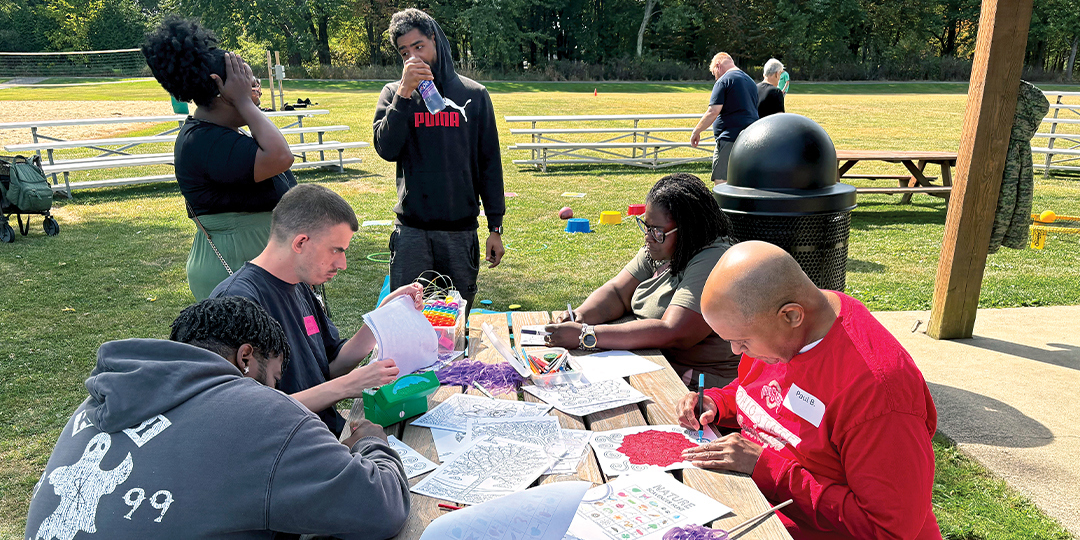
Over the last six or seven years, that job description has changed.
“Our team is completely focused on our residents,” says Chris West, president and CEO. “Everything we do is to make sure that individual’s life is just a little bit better every day.”
Today, housing is the foundation. From there, NCCH works alongside families, county boards, care partner organizations and community resources to help residents build greater independence and connection.
Sometimes that wider mission reveals itself during something as ordinary as a maintenance call.
NCCH technicians don’t simply fix a problem and close the work order. If a resident appears to be struggling or damage to a home might signal a larger issue, they bring it back to the team. Residential services liaisons, who visit homes monthly, do the same. NCCH can then connect with a provider or county board to determine what additional support might help.
“It’s not just about fixing something and getting the work order numbers up and done and out of the way,” West says. “We’re making a big difference.”
Through its Residential Services Program, NCCH also connects residents with resources and opportunities to get together, from karaoke and cooking programs to music therapy and game nights. Partnerships with organizations including The Greater Cleveland Food Bank and Food Rescue US help address food needs.
The homes are evolving too. As residents age and mobility changes, NCCH is planning new and replacement housing with ranch layouts, wider doorways and roll-in showers.
Increasingly, families are turning to NCCH because they simply don’t know where to begin navigating housing, benefits, county boards, service providers and government agencies. West’s big goal is a dedicated call center that could become a central connection point for those resources. He believes NCCH could be just a few years away from making it happen.
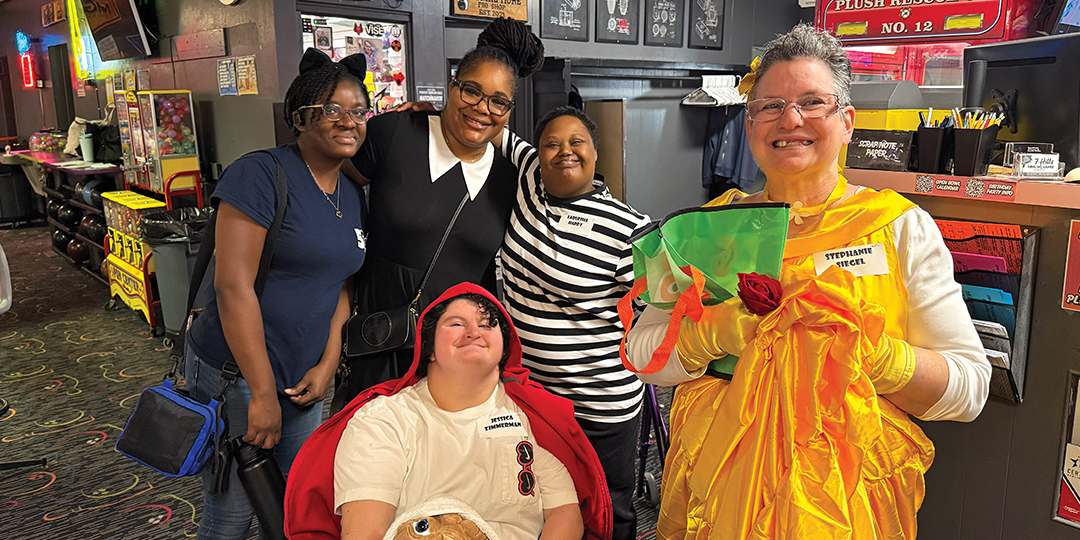
It’s another step in NCCH’s evolution from landlord to housing provider, navigator and collaborator. “Every one of our 564 — that’s a number, but there’s a person behind every one of them,” West says.
‘All of us together’
The flames are out. The fire trucks are pulling away. But for the family standing outside, the crisis is far from over.
Where will they sleep? Do they have their medications? Eyeglasses? Car keys? A working phone? What will they need to get through the next few days?
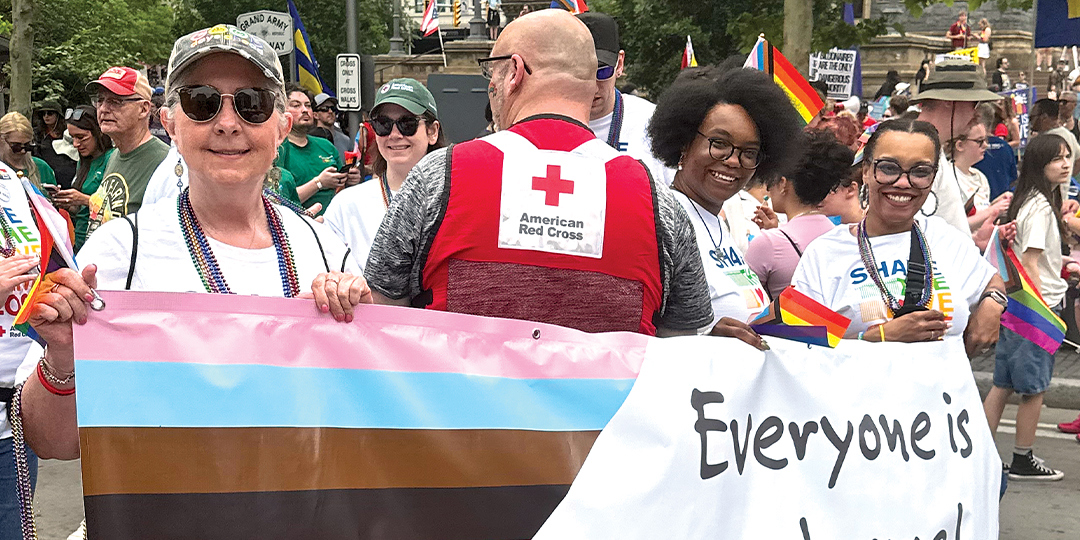
Across northern Ohio, American Red Crossteams respond to three or four home fires a night, says Michelle Polinko, regional chief development officer. “That is probably the biggest unknown fact about the Red Cross,” she says. “People see us on the national news responding to crises or they’ve experienced the Red Cross by donating blood or taking a community class like CPR. But when we talk about local disaster response, fires are the No. 1 disaster we respond to with an average of 60,000 nationwide.”
Once firefighters have done their job, Red Cross volunteers help families begin figuring out what comes next, from a safe place to stay to financial assistance for immediate necessities.
It is the kind of response most people associate with the Red Cross. But much of the work happens before the sirens.
The organization approaches resilience in three stages: preparedness, response and recovery. It works alongside fire departments, emergency management agencies, businesses and community organizations to teach home fire safety, install free smoke alarms and help families create escape plans.
Those partnerships matter when disaster strikes. So do the volunteers who make much of the response possible. About 90% of the Red Cross workforce in the disaster space is volunteer.
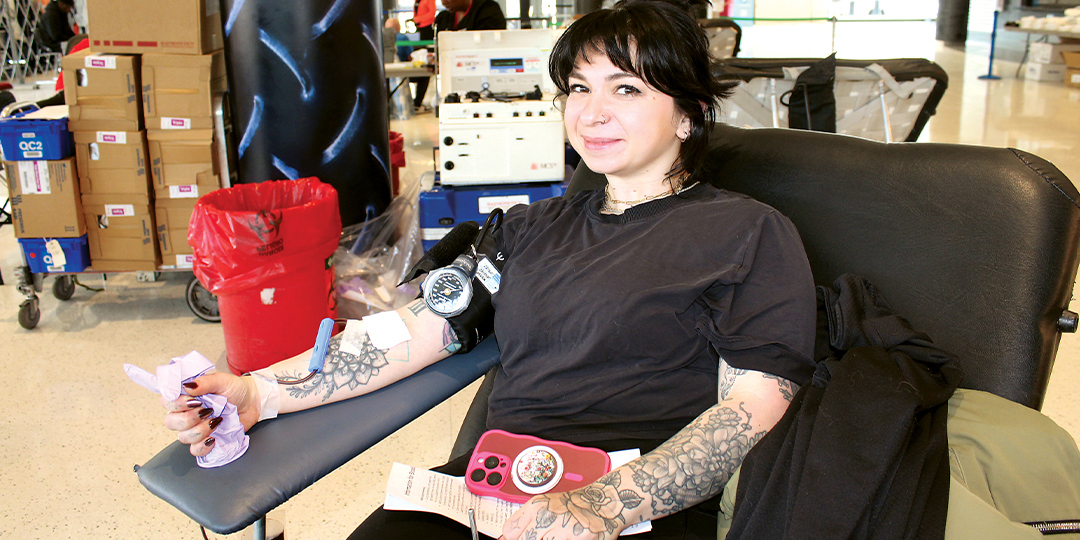
“The collaboration of all of us together is what makes a community safer, more resilient,” Polinko says.
Building a Place to Belong
It started with a question no parent wants to leave unanswered: What happens to our child when we’re gone?
Grace is 23, has Down syndrome, works full time and has been surrounded by a family determined to help her live a full, independent life. But when her mother, Leslie, was diagnosed with esophageal cancer about 2.5 years ago, she and her husband, John, began looking more urgently toward their daughter’s future.
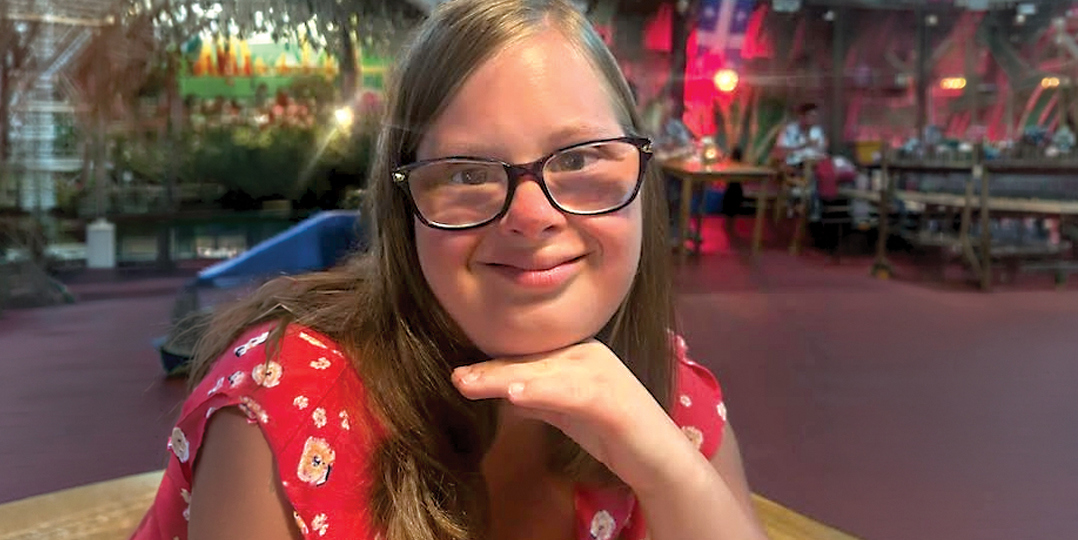
They found a community in Hudson that seemed like the answer — until they learned there was no room for Grace. The waiting list included about 100 people.
Then, this past Easter, family friend Michelle Huzl says she woke from a vivid dream with a conviction she couldn’t shake: Build a house for Grace. A few months later, Leslie’s cancer returned at stage 3. The idea suddenly carried even greater urgency. And people began showing up.
Since April, the volunteer team has established Grace Community House as a nonprofit, assembled a board, opened a bank account, launched a website, connected with a builder and begun searching for land in Greater Cleveland.
The momentum is building. The organization is working toward its $13-million fundraising goal and has been approved by Johnson & Johnson and Benevity for corporate giving donations, opening another avenue for supporters to help move the vision forward.
Every conversation seems to lead to another connection, Huzl relates.
The vision has grown well beyond one house. Grace Community House is planning a neighborhood-style development with homes surrounding a central community clubhouse. Residents will live independently while having access to shared meals, activities and on-site support.
The goal is independence, but also something harder to build into blueprints: friendship, connection and belonging. And a community is already forming around the idea.
“This is about Grace and the men and women who it will help in providing that sense of belonging, that sense of lifelong friends and a community where they truly can grow as an individual,” Huzl says.
Trending
-
1
-
2
-
3
-
4
-
5