
Northeast Ohio Anglers Saw an Uptick in Rare Salmon This Fall Season
Despite a slow fall on Steelhead Alley, chinook and coho salmon, typically seen in New York or Michigan, are straying into local waters at higher rates.
by Dillon Stewart | Dec. 31, 2025 | 7:00 AM

Kumbo Leng displays a Rocky River king salmon caught on November 15, 2025. | COURTESY MIKE DURKALEC
Even the most skilled anglers know fishing takes a little luck. But as fly and float fishermen brave the chilly fall and winter waters on the Conneaut, Chagrin, Grand and Rocky rivers, the most fortunate among them stumble upon a surprising catch: Great Lakes salmon.
“It’s not as much a viable fishery as they are a novelty,” says Mike Durkalec, an aquatic biologist for Cleveland Metroparks. “I like to highlight and talk about them just because most fishermen have heard about one caught or seen one caught.”
During the Steelhead season, which runs from fall to spring, Northeast Ohio fishermen eagerly wait for Durkalec’s fishing reports for the Cleveland Metroparks. These dispatches break down how the weather will affect water conditions, where fish are being caught, and what lures and flies have been attracting them. He also highlights readers’ notable catches. Durkalec has seen “several dozen” salmon caught this year — more than ever before, he says.
Anglers aren’t landing salmon in huge numbers, to be clear. Durkalec’s “best professional guess” is that there are about 100 total in streams across the state, maybe one or two dozen each. “Just enough that anyone may get lucky and stumble into one while steelhead fishing,” he says. Most of them are coho, chinook (aka king), and some pink salmon, in which scientists are seeing population growth. It’s been a silver lining in a second slow steelhead season in a row.
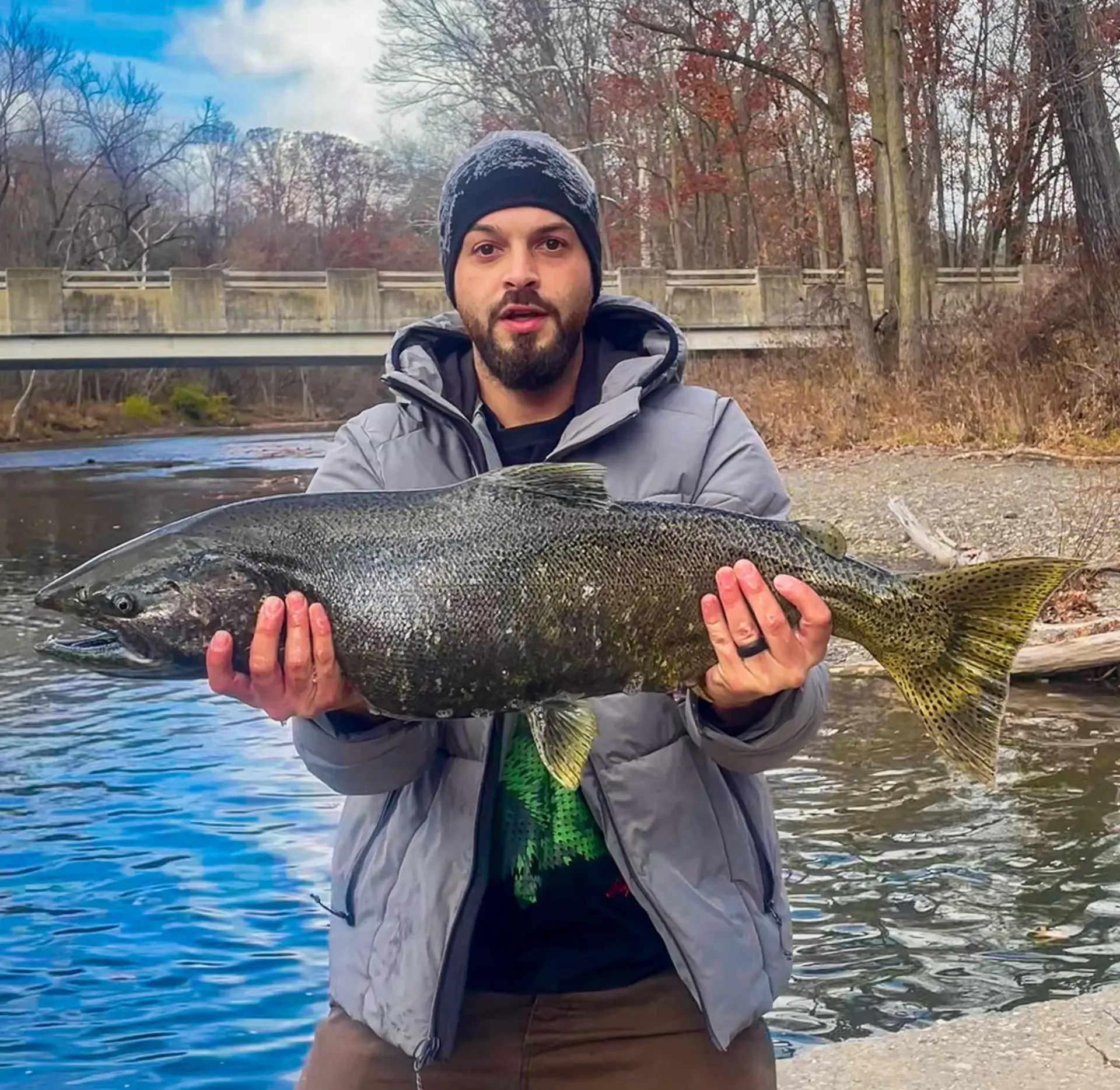
“I have fished steelhead in Ohio for 40 years, even before serving the public in the form of the steelhead fishery for another 20 years,” says Durkalec, “and I honestly don't remember another year where we had quite this many stray salmon.”
Back in the ’70s, the Ohio Department of Natural Resources stocked the Lake Erie drainage with chinook and coho salmon. Officials stopped after realizing the system was better suited for steelhead, which offered stronger return rates, as they don’t die after spawning, and superior sporting.
Now, the salmon arriving in local waters come from other Great Lakes fisheries. Upstate New York is home to some of the most famed salmon fishing in the country. Images from Salmon River in Pulaski, New York, for example, show fall fishermen lining up, sometimes less than 10 yards apart, to take advantage of the annual salmon run from Lake Ontario. But as Durkalec puts it, “they’re not jumping Niagara Falls” to get from Lake Ontario to Lake Erie.
That means most, if not all, are coming from Lake Huron. Michigan also has a robust salmon population, with coho and chinook salmon being the dominant strains. Still, some come from even farther than that, “if they get the itch to travel,” Durkalec says.
Steelhead, the popular target of fall river fishing in Northeast Ohio, aren’t really that different from salmon. Salmon and steelhead, which are a form of rainbow trout, are different species from the same genus, Oncorhynchus. They look similar, too, especially the fresh ones, which shine with a gun-metal silver. Steelhead can also develop the hooked jaw associated with salmon. Steelhead and coho salmon run about 5-10 pounds and average two feet long. King salmon are bigger, hence the name, and can exceed 3 feet in length
“The fresher the fish the more they look alike because they’re all just silver,” says Durkalec. “You really have to have a keen eye and some experience to tell them apart.”
Thus, both also benefit from the same conditions, including temperatures, pH levels, food and flow rate. But why do they leave home?
Biologists call this behavior of leaving their native streams “straying.” Evolution has taught fish to stay within the streams in which they were born — or, for those that were farm-raised and stocked, the streams in which they think they were born. Sometimes straying is as simple as the fish being confused. Fish navigate the rivers using scent, and shale-based Great Lakes streams have similar chemical fingerprints. Sometimes they’re chasing food or water temperatures that are warmer or cooler. Mostly, scientists think it’s an evolutionary behavior of spreading out populations and “putting your eggs in more than one basket,” says Durkalec (pun intended).
It’s unlikely, however, that this uptick is evidence that a strong population of salmon is taking root in the local fishery. The chances are low that the few who stray can survive predators, find consistent water temperatures, and bump into the males or females they need to reproduce in high numbers.
Plus, salmon die quickly after spawning. In fact, that’s what makes them so hard to catch. Since steelhead return to Lake Erie after spawning, they need to start eating again in the spring. Salmon don’t. So, their stomachs shrink, and they stop feeding.
Over 40 years of fishing, Durkalec remembers each of his encounters with salmon in Northeast Ohio.
Your best chance, especially for coho, he says, is with artificial presentations that elicit a response. A wobbly spoon or a plug on a spinning rod, or maybe a streamer on a flyrod, improves your chances over a small fly. That said, anglers regularly catch salmon on egg sacs and sometimes on streamers. Durkalec’s hunch is that the Rocky River gets a few more, as it's closer to Michigan, but he’s heard of some being caught in the Chagrin, including at Euclid Creek.
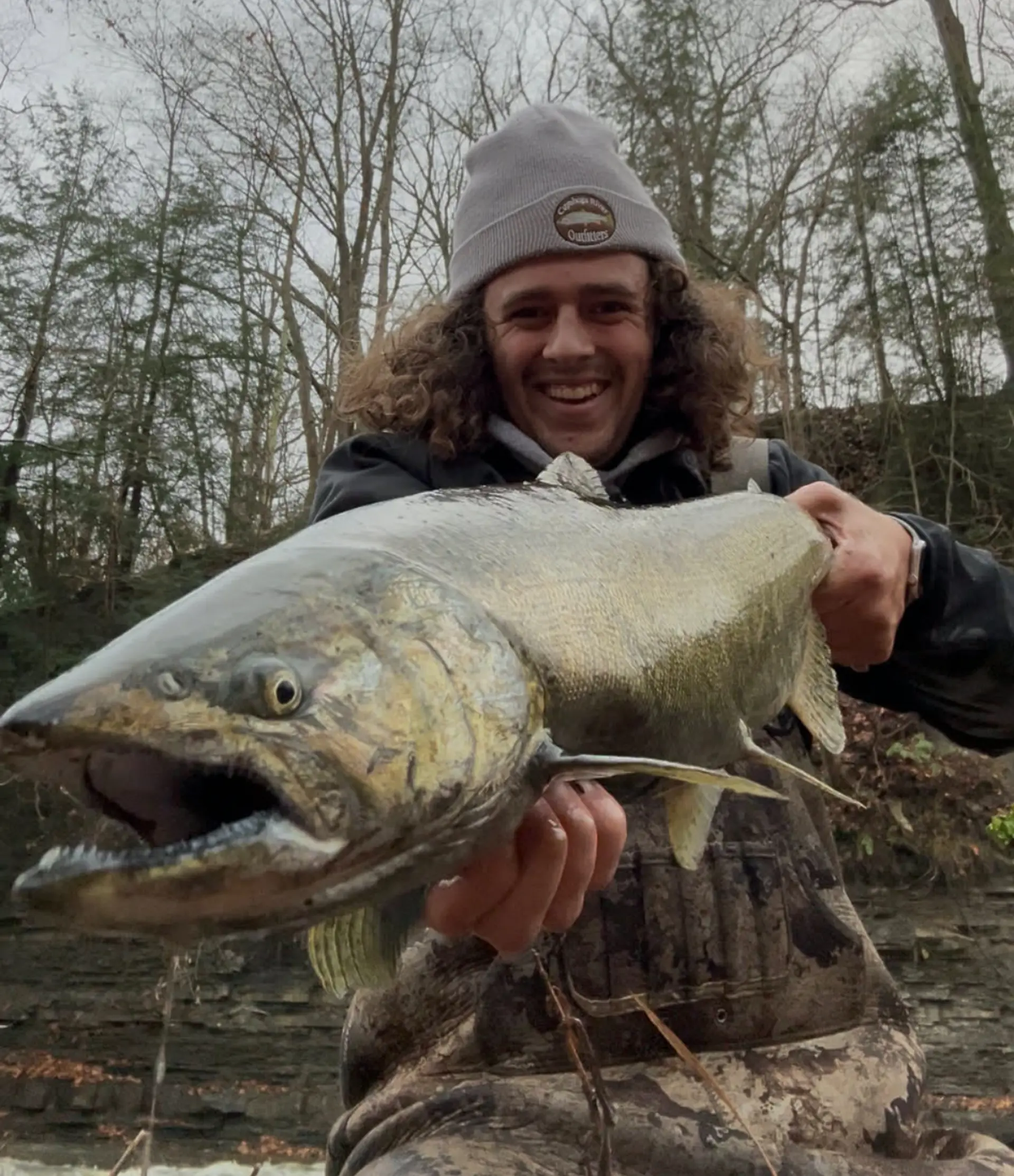
Some have had success specifically seeking them out. Mike Simon hooked a salmon in the Rocky River in early November 2025 but lost it, Durkalec says. After fishing the same spot repeatedly over the next two weeks, he finally caught this king salmon. Simon believes it's the same fish. It's a unique case, which is why Simon considers it the "catch of a lifetime."
“The reality is you’re not going to go out targeting salmon,” Durkalec says. “It’s something you might catch incidentally, when targeting steelhead.”
Over 40 years of fishing, Durkalec remembers each of his encounters with salmon in Northeast Ohio, all occurring accidentally while steelheading. There were four coho salmon and one humpback pink salmon. Of course, he still regrets not landing the chinook salmon he hooked and lost.
But elusiveness gives fishing its sport. The elusiveness of simply catching a fish drives the beginner. More advanced anglers strive for the big one. But Durkalec and his chinook salmon are proof that no matter how long you fish and how well you know the waters, there’s always one more elusive catch waiting for you.
For more updates about Cleveland, sign up for our Cleveland Magazine Daily newsletter, delivered to your inbox six times a week.
Cleveland Magazine is also available in print, publishing 12 times a year with immersive features, helpful guides and beautiful photography and design.

Dillon Stewart
Dillon Stewart is the editor of Cleveland Magazine. He studied web and magazine writing at Ohio University's E.W. Scripps School of Journalism and got his start as a Cleveland Magazine intern. His mission is to bring the storytelling, voice, beauty and quality of legacy print magazines into the digital age. He's always hungry for a great story about life in Northeast Ohio and beyond.
Trending
-
1
-
2
-
3
-
4
-
5