The Primate Forest is a Centerpiece of the Cleveland Metroparks Zoo’s Longtime Transformation
The Cleveland Metroparks Zoo’s $120 million Primate Forest project unveils the first phase of its Primate Forest project on Oct. 22.
by Annie Nickoloff | Oct. 15, 2026 | 8:31 AM

Photo courtesy Cleveland Metroparks Zoo
“Touch grass” is internet slang that means: log off, come back to reality and calm down. At its core is a reference to the healing qualities of the outdoors. But imagine if you never had that chance?
“Some of these orangutans have never experienced grass,” says Chris Kuhar, the executive director of the Cleveland Metroparks Zoo.
That changes on Oct. 22, when the zoo opens the first phase of its new Primate Forest. The project is the largest capital improvement in the zoo’s 144-year history. The apes, which have resided in the former Rainforest’s indoor, domed habitat since it opened in 1992, will soon have a new outdoor yard to use during the warmer months in Cleveland. There, they can swing on ropes courses, climb up and down trees and nap in the shade.
The orangutan habitat is the centerpiece of the opening, and it will be followed by a second Primate Forest phase completed by 2032, in time for the zoo’s 150th anniversary. When it’s entirely complete, the ambitious project will transform the former Rainforest building and more than double its original 63,000 square feet into a 140,000-square-foot combined indoor and outdoor campus. It’ll be divided into three sections: the Tropical Forest, the Orangutan Forest and, in the future, the Gorilla Forest.
The $120 million endeavor broke ground in 2024, and its first half’s $70 million price tag was funded through zoo funds, partnerships, donations and state capital funds.
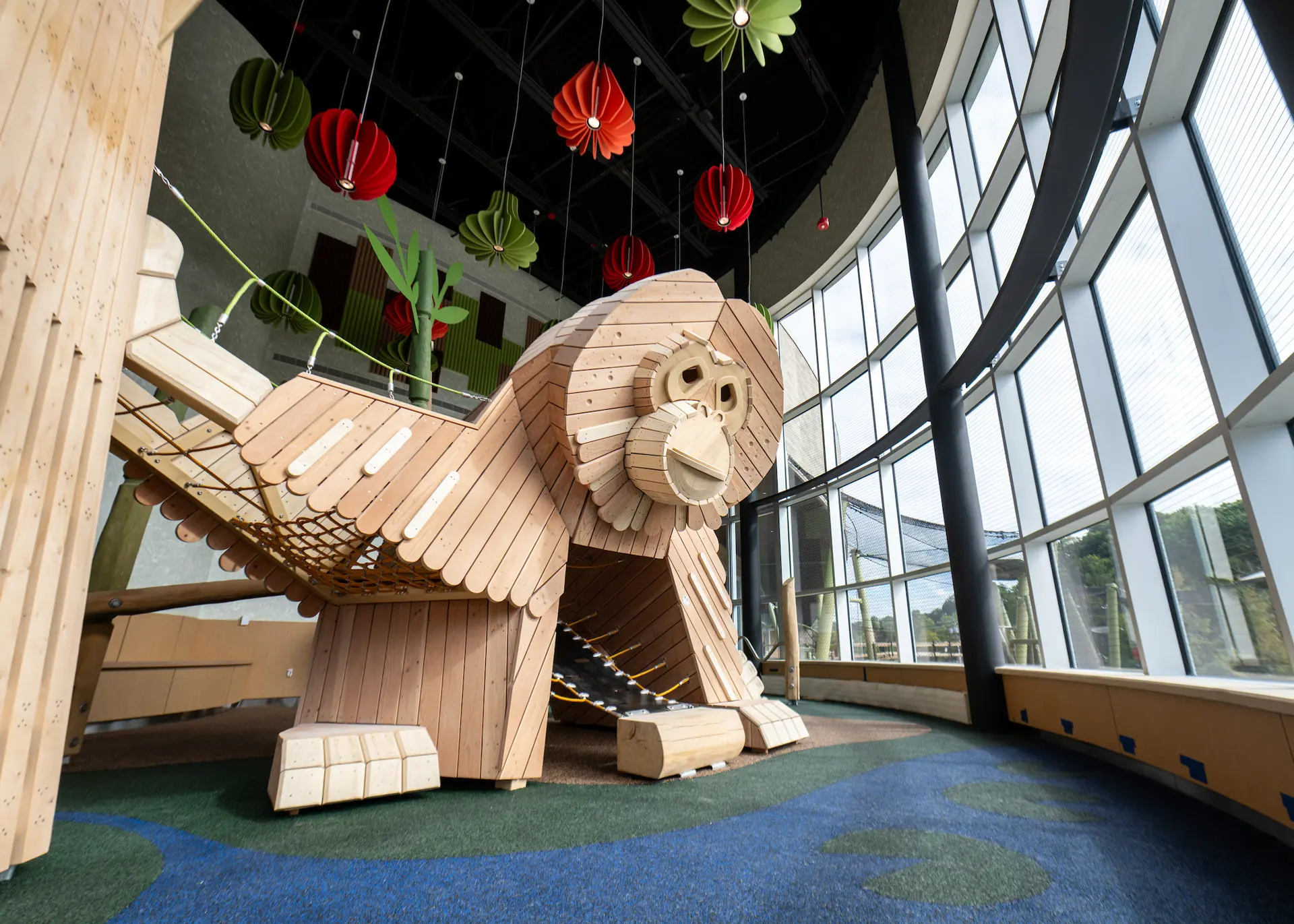
On a summertime tour, the space was still a construction site, but Kuhar imagined what the expanded Primate Forest would be once it opened. Teams can rent meeting rooms and reception areas that overlook the zoo, even using parts of a swanky new food court for events. Kids can play on an indoor orangutan-shaped playground, which overlooks the outdoor orangutan yard. Families can head to a design lab to let their imaginations run wild about the future of Cleveland conservation. A theater will show calming scenes from ecosystems around the world and share stories about nature and its benefits to humans.
While those are the ways that humans will experience it, the design is really all about the animals, and it showcases the kind of work that used to happen behind the scenes at the zoo. Attached to the orangutans’ day room, visitors can see the animals’ healthcare appointments, as veterinarians complete blood draws, blood pressure checks and cardiac ultrasounds on the animals.
Seeing animal health can also help people think about their own health, Kuhar says.
“On every animal in our care, we focus on diet and exercise, and that’s the same narrative that we hear when we go to doctors as people,” Kuhar says. “I’d like to think of this building and how our zoo is thinking about ourselves as the next step in an evolution. Now we’re starting to think of ourselves, maybe, less as conservation organizations, even though we do conservation. We’re really health organizations.”
*****
Parts of the old Rainforest building feel similar to how they always have. Winding paths guide visitors through lush habitats for sloths,
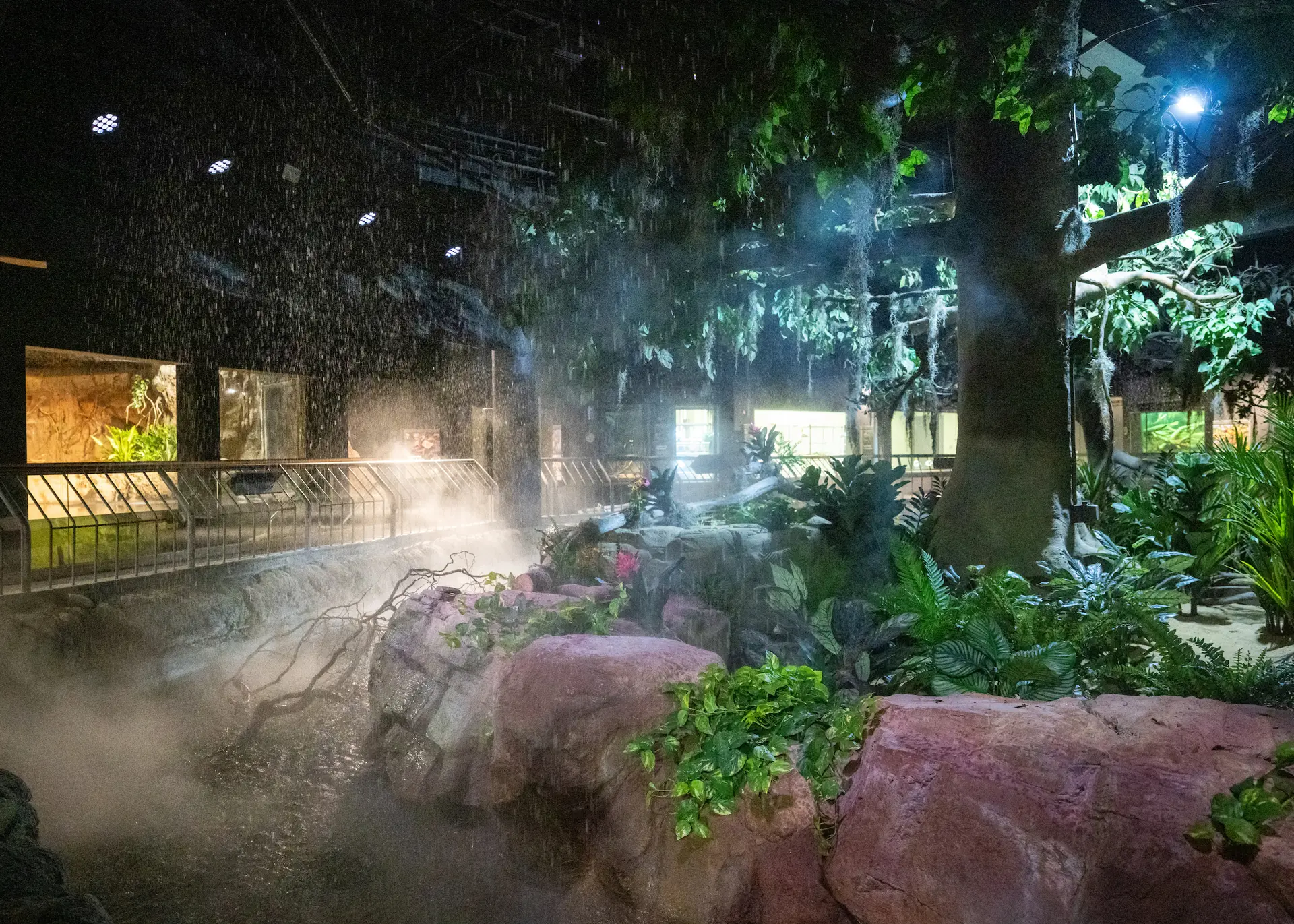
otters, capybaras and tropical birds. A tropical rainforest room’s central exhibit still periodically booms with thunder and a downpour of rain from the ceiling: an iconic Cleveland experience.
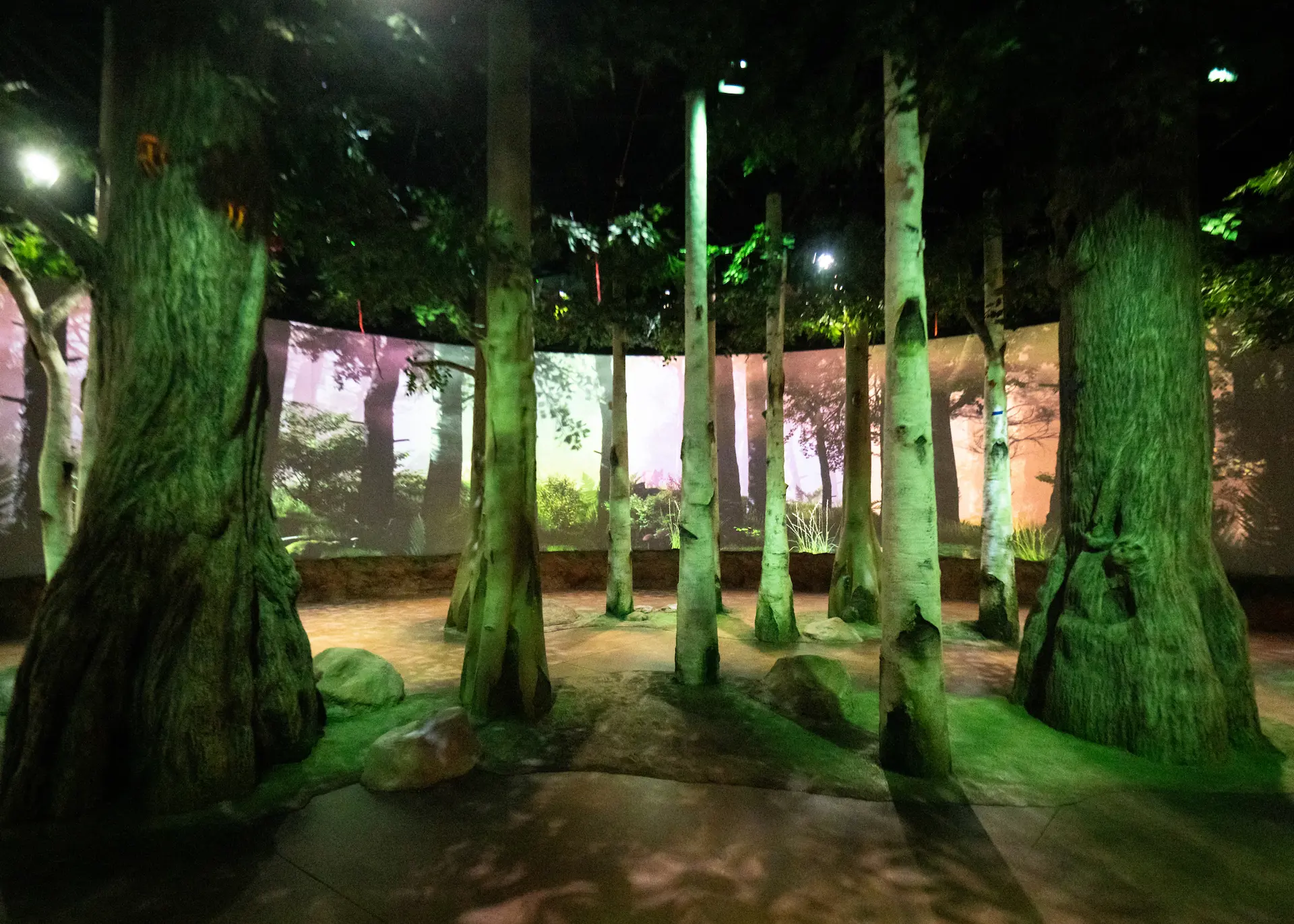
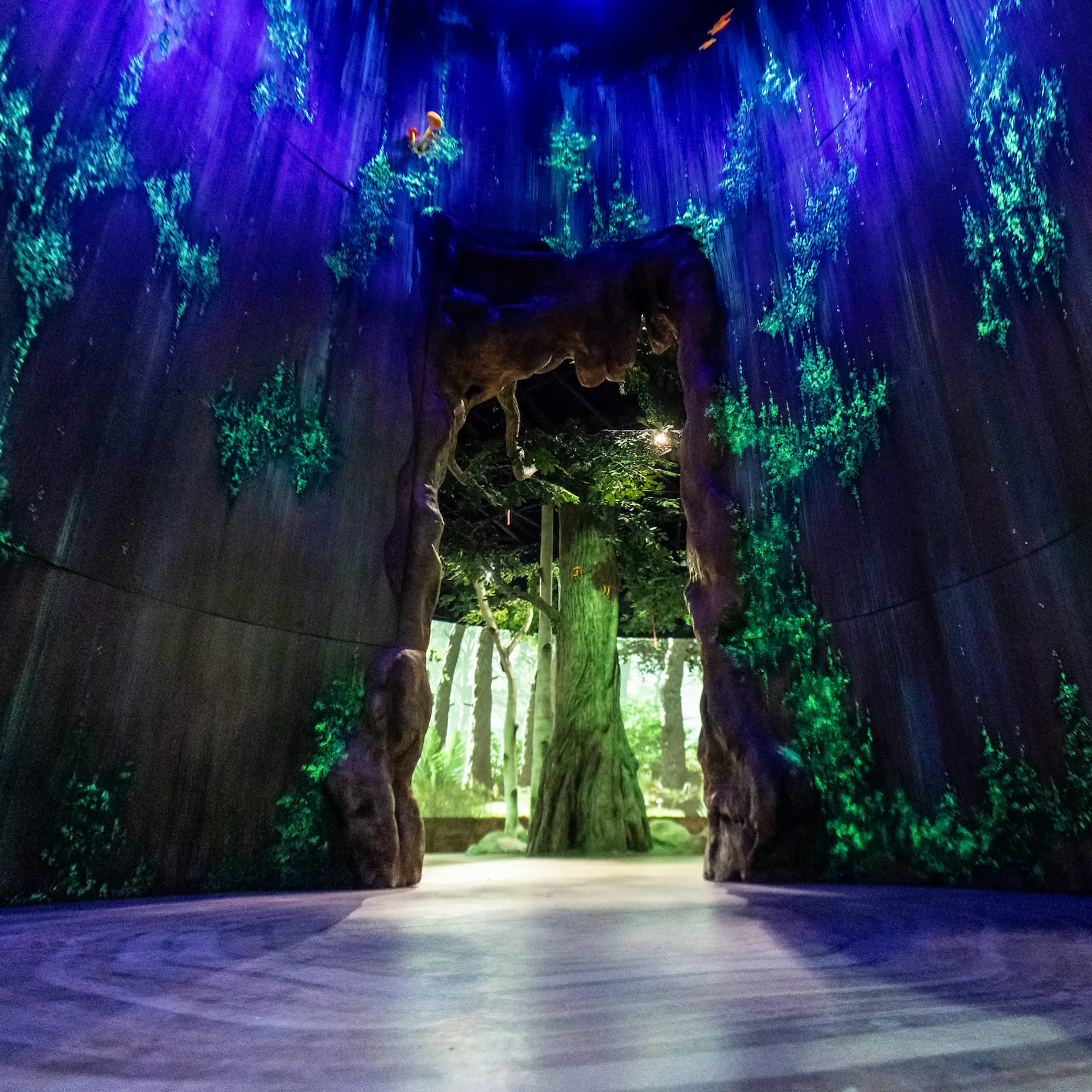
But the 25-foot waterfall at the building’s main entrance is gone. Guests experience a new entryway, the CrossCountry Mortgage Forest Home, where projections envelop the room in a virtual forest, with webs of lights zapping in the bark of tree sculptures.
Arachnophobes, breathe a sigh of relief: The ant tubes and open-air orb-weaver spider displays have been removed. They’ve been replaced with a window to a room where conservationists contribute to reintroduction efforts for threatened and endangered critters.
In this room, teams will breed pebbly-skinned Puerto Rican crested toads and tiny spotted turtles — not to spend their lives in zoos, but to release back into the wild. The zoo has contributed to these animals’ conservation programs, along with offsite programs for garter snakes, over the past decade.
“People really are interested in all these things that we do behind closed doors that they never really knew about,” says Elena Less, one of the zoo’s animal curators.
For the most part, gone are the days of capturing animals from the wild to plop into cages, says Less. But that wasn’t the case for much of the zoo’s history. When it opened at its original Wade Park location in the 1800s — where the Cleveland Museum of Art now stands — the then-named Cleveland Zoological Park received many of its animals from the community. It established its small exotic animal collection through gifts and purchases from animal merchants like Carl Hagenbeck and circus operators like Peter Sells, who donated a pair of lions in 1901, according to a Cleveland Leader report.
In 1907, after the zoo moved to its current Old Brooklyn location, it brought in its first elephant, Minnie. Then came monkeys, tigers, hyenas, kangaroos and more (...oh my). In 1927, following a campaign by The Plain Dealer, sled dog Balto and his six teammates were moved to the zoo to live out their days in peace. Throughout the 1950s and in 1960, expeditions and safaris around the world yielded much of the zoo’s collection.
It wasn’t long before philosophies around zoos began to shift. Both the Animal Welfare Act of 1966 and the Endangered Species Act of 1973 overhauled national zoo operations, emphasizing animal welfare, regulating transfers of animals and managing sustainable populations.
In the decades that have followed, zoos across the country evolved their animal habitats to become more immersive and enriching, putting the focus on education and conservation. Today, almost all animals in zoos were bred in captivity.
“I was going to zoos in the ’80s and ’90s as a kid, but even before that time — especially before that time — zoos really were just, Hey, come look at this cool animal. It’s here in a very simplistic exhibit for you to stare at,” Less says. “That’s where the big switch was: from zoos being just a place of entertainment, to really wanting people to see animals, learn about the animals, feel inspired by the animals.”
*****
The zoo’s 25-year-old, 16-foot-long Burmese python, named Cinnamon, once could only bend and curl inside of her boxy exhibit space inside the Rainforest. Now, she is able to fully stretch out into a second, connected room filled with leaves and ground cover to explore.
“There’s a lot of researchers that study the idea of animal well-being, and it’s kind of a nebulous topic,” Less says. “Like, how do you really know what an animal’s experiencing? But there’s a lot of data and research that goes into that now, and some zoos are really on the forefront.”
For the Primate Forest’s dwarf crocodile, Shayna, research led to adding features in her space, including shelves that allow her to partially rest in the water, a sloped water entryway and a hidden cave. In Cinnamon’s case, the research showed that Burmese pythons benefit when they are able to extend the full length of their bodies.
“The general theme is giving our animals a lot more choice in where they want to be and what they want to do,” Less says, “even down to a snake like Cinnamon.”
That philosophy broadly defines the Cleveland Metroparks Zoo’s 150 Campus Plan, manifested into a variety of habitats and exhibits spread over the 183-acre park. The series of major capital improvements started in 2011 with the transformation of the elephant exhibit into a five-acre space, complete with mud pits, two pools and a crossing area that opens and closes for the massive pachyderms. Next came 2016’s adventurous Rosebrough Tiger Passage, with elevated tunnels for the felines to make their way into different zones. In 2018, the Asian Highlands, which houses red pandas, snow leopards and takin, got a makeover — which was followed by the Daniel Maltz Rhino Reserve in 2020 and Susie’s Bear Hollow, which hosts Andean bears and sloth bears, in 2023.
Each of these spaces provides more room for the animals and also allows visitors to get closer to the creatures, some even allowing people to navigate through or between elements of the exhibits.
Those five projects, combined, cost a total of $45.9 million, much of which was provided by donors and philanthropists. That price tag pales in comparison to the $120 million that’s being spent on the Primate Forest — a project that revolves around the zoo’s popular gorilla troop, once featured in the 2023 Netflix livestream Baby Gorilla Cam.
“We started, back in 2015, imagining a big gorilla project, because the zoo has, literally, globally leading conservation and research programs with gorillas,” Kuhar says, “but we don’t have a facility that highlights that.”
Currently, the troop is stationed in an enclosure at the Primate, Cats & Aquatics building, which was constructed in the 1970s and predates the old Rainforest by more than a decade.
“I’m proud of what we’ve done with that space, with what we have,” Less says, “but it’s no question that they need a better space.”
Soon, like the orangutans, the gorillas will get a state-of-the-art home in Primate Forest’s second, and final, phase. Other projects are lined up to follow its completion, including a reworked front entrance to the zoo. Beyond 2032, more improvements are already being imagined — most of which are centered around resident animals’ well-being. Kuhar says he hopes to update more of the zoo’s bear habitats next, providing a more enriching environment for its hulking grizzlies.
“I probably have 75 capital projects in my head that we’d like to be able to do,” Kuhar says. “We’re trying to be responsible with the resources that we have, invest in such a way that allows us to not only provide a good guest experience but allows us to be more
financially stable.”
As in past evolutions, the zoo’s future will be guided by the animals’ needs — the same furry, scaly, colorful, camouflaged, big and small animals that have greeted Clevelanders for the past century and a half. And the next evolution starts now, at the Primate Forest.
“We innovate at this intersection of human health and animal health and habitat health, and that’s really what conservation is; that’s really what animal welfare research is; that’s really what the guest experience is,” Kuhar says. “This building represents that in many ways.”
For more updates about Cleveland, sign up for our Cleveland Magazine Daily newsletter, delivered to your inbox six times a week.
Cleveland Magazine is also available in print, featuring immersive stories, helpful guides and beautiful photography and design.

Annie Nickoloff
Annie Nickoloff is the senior editor of Cleveland Magazine. She has written for a variety of publications, including The Plain Dealer, Alternative Press Magazine, Belt Magazine, USA Today and Paste Magazine. She hosts a weekly indie radio show called Sunny Day on WRUW FM 91.1 Cleveland and enjoys frequenting Cleveland's music venues, hiking trails and pinball arcades.
Trending
-
1
-
2
-
3
-
4
-
5